LearnBad Breath
What Is Keto Breath? Causes, Duration, and How to Manage Acetone Halitosis
Keto breath is linked to acetone, a volatile ketone exhaled during ketosis. Learn why it happens, how long it may last, and what can realistically help.
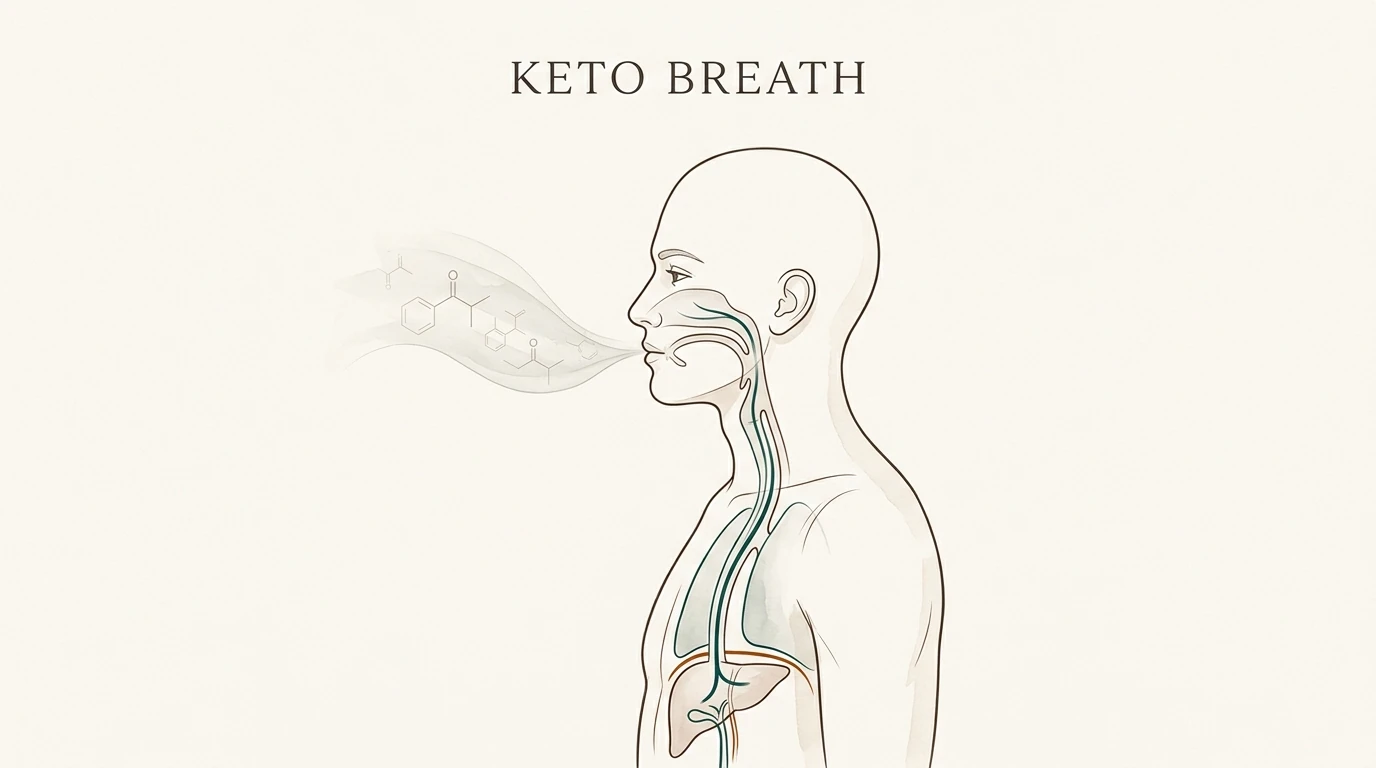
Many people who start a ketogenic diet notice a change in their breath within the first days or weeks — an unusual, sometimes fruity or metallic smell that does not respond to brushing or mouthwash. This is commonly called keto breath, and the reason it persists through regular oral hygiene is central to understanding it: the source is not the mouth.
Most persistent halitosis originates in the mouth, where bacterial activity produces volatile sulfur compounds and other odour-causing gases. Keto breath is different. It originates inside the body and arrives on the breath already exhaled from the lungs. Oral hygiene does not reach that source.
This article explains what keto breath is, why it happens at the level of metabolism, how long it may persist, and what — if anything — can realistically help manage it.
Editorial context: This is independent consumer health education, not individualized medical or dental advice. It does not diagnose any individual’s condition. Persistent or unusual breath odor should be evaluated by a licensed healthcare professional. Fruity or acetone-like breath can occur in both nutritional ketosis and diabetic ketoacidosis. If you have diabetes or are experiencing concerning symptoms alongside this odor, please read the diabetic ketoacidosis section below and seek appropriate medical evaluation.
Review MouthMetric’s research methodology and evidence evaluation approach.
What Is Keto Breath?
Keto breath is the term commonly used for the breath odor that some people experience when their body has shifted into a metabolic state called nutritional ketosis. In ketosis, the body relies primarily on fat for fuel rather than carbohydrates, and this metabolic shift produces a specific class of compounds called ketone bodies. One of those ketone bodies — acetone — is volatile, meaning it evaporates easily. The body cannot efficiently convert it into energy, so it is expelled through the lungs when you breathe out.
The result is an odor on the breath that originates from the lungs rather than from the mouth itself.
Not everyone who follows a ketogenic diet notices keto breath, and those who do tend to report it most strongly during early strict carbohydrate restriction. The experience varies considerably between individuals.
What Does Keto Breath Smell Like?
The odor associated with keto breath is most often described as fruity, sweet, or slightly metallic. It is frequently compared to the smell of nail polish remover — which is an apt comparison, because acetone (C₃H₆O) is the same compound found in nail polish remover and paint thinners.
These descriptions are consistent across clinical observations and widely reported accounts. The precise intensity and character of the smell varies with the degree of ketosis, individual metabolic differences, and diet composition. Other dietary factors may also influence breath odor during a ketogenic diet, so not every unusual smell is necessarily caused by acetone alone.
Why Does Ketosis Cause Breath Odor?
Understanding keto breath requires a brief look at what happens metabolically when carbohydrate intake drops below the threshold the body typically relies on.
The shift from glucose to fat
The body ordinarily runs on glucose derived from dietary carbohydrates. When carbohydrate intake is severely restricted, blood glucose levels fall, and insulin levels drop with them. The body then turns increasingly to stored fat as an alternative fuel source.
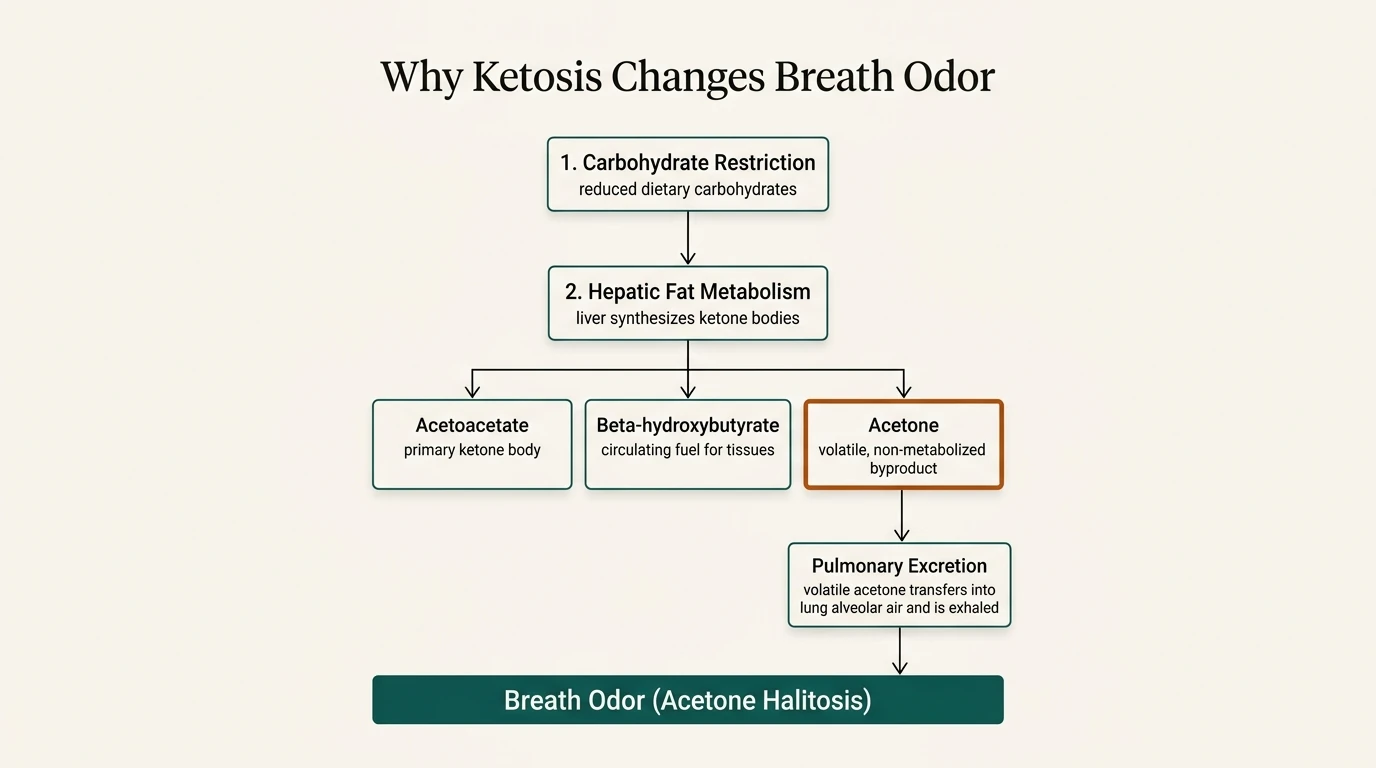
The liver breaks down fatty acids through a process called beta-oxidation, generating a class of molecules known collectively as ketone bodies. Three ketone bodies are produced:
- Acetoacetate — the primary ketone body produced in the liver from acetyl-CoA
- Beta-hydroxybutyrate (BHB) — produced from acetoacetate; the predominant ketone circulating in the bloodstream and the main fuel source delivered to tissues
- Acetone (C₃H₆O) — formed from the spontaneous, non-enzymatic breakdown of acetoacetate (decarboxylation); the body cannot efficiently use it as fuel
Acetoacetate and beta-hydroxybutyrate are metabolically useful — tissues including the brain, heart, and muscles can convert them to energy. Acetone cannot be efficiently re-used in this way. Because it is a small, volatile molecule, it crosses readily from the blood into the alveolar spaces of the lungs and is exhaled in breath.
This is a pulmonary excretion event: the acetone is coming from the body’s metabolic processes and leaving via the lungs. It does not originate in the mouth, and oral surfaces are not its source.
Keto Breath vs. Ordinary Bad Breath
The distinction matters practically, because it determines what can and cannot help.
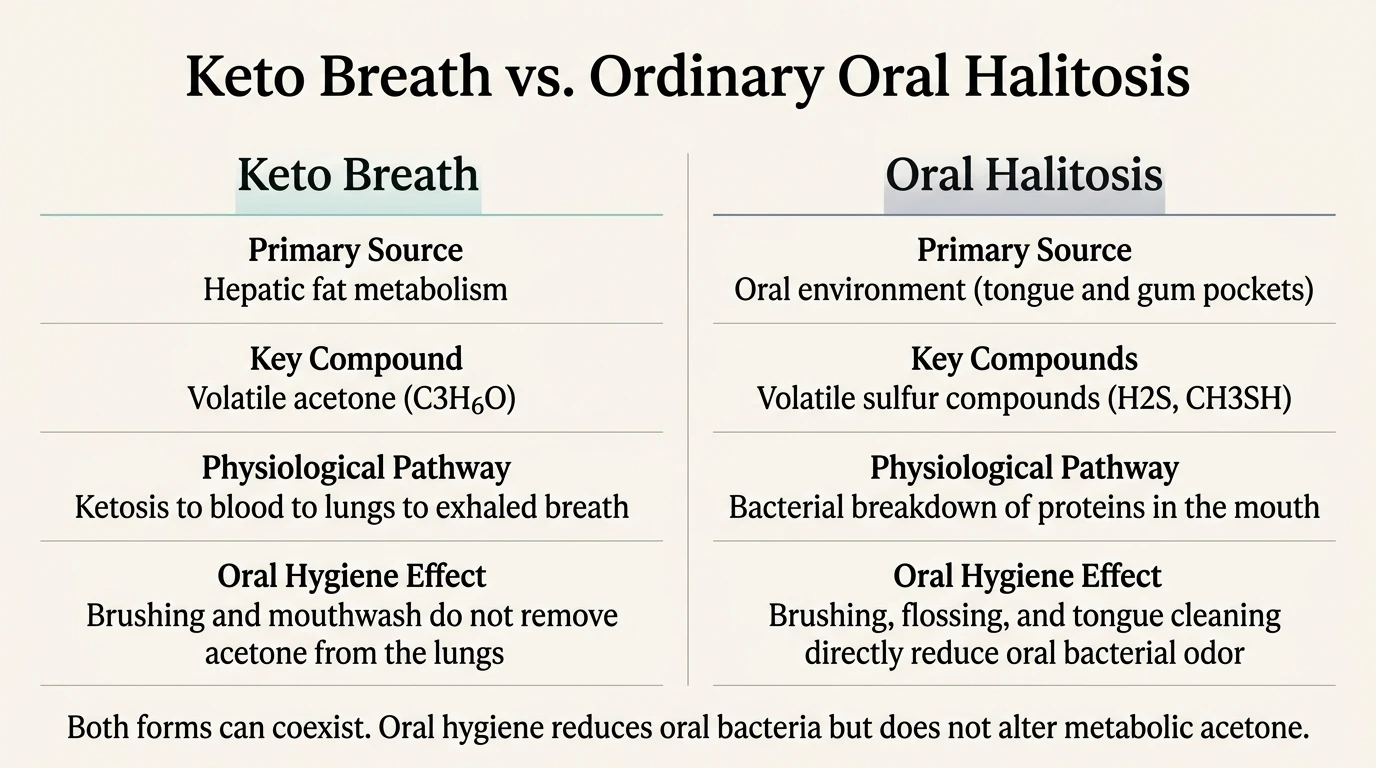
Most persistent halitosis originates in the mouth, where anaerobic bacteria — concentrated on the tongue dorsum and in periodontal pockets — break down sulfur-containing amino acids from proteins in saliva and food debris. This releases volatile sulfur compounds (VSCs) including hydrogen sulfide (H₂S) and methyl mercaptan (CH₃SH). Tongue coating, dry mouth, gum disease, and poor dental hygiene all contribute to this oral bacterial production.
Keto breath involves acetone produced systemically and exhaled from the lungs.
| Ordinary halitosis | Keto breath | |
|---|---|---|
| Primary source | Oral bacteria (tongue, gum pockets) | Hepatic fat metabolism; acetone exhaled from lungs |
| Key compounds | Volatile sulfur compounds (H₂S, CH₃SH) | Acetone (C₃H₆O) |
| Related to diet? | Partly (food debris, dry mouth triggers) | Directly: carbohydrate restriction drives ketogenesis |
| Affected by oral hygiene? | Yes — brushing, tongue scraping, and rinsing reduce VSC production | Partially — oral hygiene can reduce any co-occurring oral halitosis, but does not address acetone from the lungs |
| Affected by hydration? | Yes — dry mouth compounds oral bacterial odor | Hydration may help prevent dry mouth, which can compound odor; does not directly reduce exhaled acetone |
Mouthwash and tongue scraping may address oral contributors to breath odor that can compound keto breath — such as dry mouth-related bacterial growth or tongue coating — but they do not remove the acetone being produced by the body’s metabolism and exhaled through the lungs. The two components can coexist, and addressing the oral component is not without value; it simply does not resolve the metabolic one.
For more on how oral bacteria produce bad breath and what interventions address that pathway specifically, see our articles on tongue scraping for bad breath and mouthwash for bad breath.
Is Keto Breath a Sign Something Is Wrong?
Keto breath can occur during nutritional ketosis. In this context, for someone deliberately following a ketogenic diet without diabetes, it is a physiological sign that the body is producing ketone bodies from fat metabolism — not inherently a sign of illness or poor oral health.
Breath acetone has been studied as a non-invasive biomarker for confirming ketosis. Research published in the American Journal of Clinical Nutrition (Musa-Veloso et al., 2002) found that breath acetone tracked plasma ketone measures closely, and can serve as a convenient indicator of ketotic states. More recent reviews, including a 2021 review in Obesity Science & Practice (Anderson et al.), have continued to evaluate breath acetone’s utility as a monitoring tool for nutritional ketosis.
In this context, keto breath — where it occurs — is evidence that fat metabolism is producing acetone. Whether this is desirable depends on the individual’s health goals and situation.
However: fruity or acetone-like breath can also occur in diabetic ketoacidosis, a serious medical emergency. The context and accompanying symptoms matter. This distinction is covered in the section below.
Keto Breath vs. Diabetic Ketoacidosis — A Critical Distinction
This section addresses a medically important distinction. If you have diabetes and are experiencing fruity-smelling breath alongside other symptoms, please read carefully — and seek medical evaluation rather than relying on this article to assess your situation.
Both nutritional ketosis (from a ketogenic diet) and diabetic ketoacidosis (DKA) involve elevated ketone bodies, including acetone. This is why both can produce a fruity or acetone-like breath odor. The similarity in breath odor is real — but the two conditions are physiologically and clinically very different.
What is diabetic ketoacidosis?
DKA is a life-threatening medical emergency that occurs primarily in people with type 1 diabetes, and sometimes in people with type 2 diabetes who use insulin. It is caused by a severe deficiency of insulin, which causes the body to break down fat at an uncontrolled, dangerously accelerated rate, producing ketone bodies far in excess of what nutritional ketosis produces. The resulting accumulation of ketone acids drives blood pH into an acidotic state — a systemic emergency.
DKA can occur when people first develop type 1 diabetes and have not yet been diagnosed, particularly in children and young adults.
| Feature | Nutritional ketosis | Diabetic ketoacidosis (DKA) |
|---|---|---|
| Context | Deliberate carbohydrate restriction | Severe insulin deficiency; primarily type 1 diabetes |
| Ketone production | Regulated by normal hormonal feedback | Uncontrolled; accelerated far beyond nutritional ketosis |
| Blood glucose | Typically normal or low | Typically high |
| Blood pH | Normal | Acidotic (below normal range) |
| Breath odor | Mild-to-moderate fruity or acetone-like | Can be strongly fruity — but NOT a reliable standalone diagnostic |
| Associated symptoms | Typically none beyond the odor | Thirst, frequent urination, nausea, vomiting, abdominal pain, confusion, extreme fatigue, blurred vision |
| Clinical status | Generally not dangerous in the absence of underlying conditions | Medical emergency — requires urgent hospital treatment |
The critical point
Breath odor alone cannot reliably distinguish nutritional ketosis from DKA. The NHS states that symptoms of DKA include: feeling thirsty, needing to urinate more often, stomach pain, feeling sick or being sick, diarrhoea, breathing more deeply than usual, breath that smells fruity like pear drops or nail polish remover, and feeling tired, sleepy, or confused.
If you have diabetes and notice a fruity or acetone-like breath odor — particularly if you also have any of the other symptoms listed above — do not attempt to determine whether this is keto breath or DKA based on this or any other article. Seek medical evaluation promptly.
The NHS advises people with diabetes who have blood ketones above 3 mmol/L, or who have symptoms consistent with DKA, to seek emergency care immediately. DKA can develop within hours and is life-threatening. If you are outside the UK, contact your local emergency medical service or go to your nearest emergency department.
If you notice fruity or acetone-like breath and have not been diagnosed with diabetes, but are also experiencing symptoms such as extreme thirst, frequent urination, nausea, or confusion, seek medical evaluation — DKA can be the initial presentation of undiagnosed type 1 diabetes.
How Long Does Keto Breath Last?
There is no well-established clinical timeline for how long keto breath lasts. The duration of keto breath is not well-characterized by controlled clinical research specifically focused on breath odor. What is better understood is the pattern of metabolic adaptation to ketosis, from which some inferences can be drawn — but individual experiences vary considerably.
Keto breath can appear early after carbohydrate restriction begins, as ketone body production increases. For some people, it may become less noticeable over time as the body adapts to a state of ketosis. During this process — sometimes called keto-adaptation — tissues may become more efficient at using ketone bodies for fuel, which can reduce the proportion of acetone produced and exhaled.
Individual variation is substantial. People differ in how quickly they adapt, how much acetone they produce, and how strongly others detect the odor. Some people report that the odor diminishes within weeks; others find it persists for longer periods.
Dietary cycling matters. Moving in and out of ketosis — for example, by periodically increasing carbohydrate intake — may restart this adaptation process, and keto breath may return during each re-induction phase.
If you have been consistently following a strict ketogenic diet and are still experiencing noticeable breath changes after several months, it is reasonable to raise this with a dentist or physician, who can assess whether there are any contributing dental or medical causes beyond the metabolic ones.
What Keto Can Do to the Mouth
Beyond acetone production, the early stages of a ketogenic diet can influence oral conditions in ways that may compound breath changes.
Dry mouth (xerostomia). The initial weeks of a ketogenic diet often involve increased fluid and electrolyte loss, which can reduce salivary flow. Saliva plays a central role in oral self-cleaning — it washes away debris, buffers acid, and limits bacterial overgrowth. Reduced saliva flow can allow oral bacterial populations to contribute more substantially to breath odor, layering oral VSC-related halitosis on top of the metabolic acetone component.
These secondary oral effects are commonly reported and mechanistically consistent with changes associated with low-carbohydrate dietary adaptation, though they are not the primary driver of keto breath.
What Can Realistically Help Manage Keto Breath?
There are no randomized controlled trials examining interventions specifically designed to reduce keto breath as a primary endpoint. The strategies discussed below are organized by the quality of reasoning supporting them — distinguishing between what is well-supported and what is mechanistically plausible but not well studied.
None of the following strategies eliminates the metabolic source of keto breath. For people whose keto breath becomes less noticeable over time, metabolic adaptation is one possible explanation — though this has not been established through breath-odor-specific clinical trials.
Time and metabolic adaptation
Basis: metabolic research on keto-adaptation; no breath-specific RCTs
As the body may become more efficient at oxidizing ketone bodies for energy over time, acetone production can decrease. This is one explanation for why some people find keto breath diminishes over weeks to months. There is no evidence-based method to accelerate this process, beyond allowing the adaptation to proceed.
Maintaining good hydration
Basis: dry mouth prevention; widely recommended; no clinical trial evidence for keto breath intensity specifically
Staying adequately hydrated can help prevent dry mouth, which may otherwise add an oral component to breath odor. However, there is not good clinical evidence showing that increased water intake directly reduces keto breath intensity or reduces exhaled acetone levels. Hydration is safe and has general health benefits independent of any effect on breath.
Maintaining oral hygiene — brushing, flossing, tongue scraping
Basis: well-supported for oral halitosis reduction; plausible for reducing keto breath’s oral component
Regular brushing, flossing, and tongue cleaning will not remove acetone from the lungs. However, they can reduce the co-occurring oral bacterial contribution to breath odor — particularly if dry mouth during early keto is allowing bacteria to proliferate. Managing this oral component does not address the metabolic source but can help with the overall breath experience during the adaptation period.
Sugar-free gum or mints containing xylitol
Basis: oral health literature supports xylitol for salivary stimulation and anti-cariogenic effects; evidence specific to keto breath is limited
Chewing sugar-free gum stimulates saliva production, which may help counteract dry-mouth effects that can compound odor. Xylitol has documented anti-cariogenic properties and does not feed oral acid-producing bacteria. Gum or mints are unlikely to reduce exhaled acetone levels, but they may improve oral comfort and help with the oral component.
Slight increase in carbohydrate intake (within individual parameters)
Basis: mechanistic — directly reduces ketone production; trade-off with depth of ketosis
Increasing carbohydrate intake reduces the degree of ketosis and lowers ketone body production, including acetone. This is mechanistically consistent: less ketosis means less acetone available to be exhaled. The trade-off is that this also reduces the depth of ketosis, which may conflict with the individual’s dietary goals. This is a personal decision — anyone managing a specific medical condition or following a therapeutic diet should make dietary adjustments in consultation with a qualified professional, not based on this article.
When Should You See a Professional?
If you have diabetes and notice fruity or acetone-like breath: Do not attempt to determine whether this is keto breath or DKA yourself. Any such odor — especially combined with thirst, frequent urination, nausea, vomiting, confusion, or abdominal pain — warrants prompt medical evaluation. Contact your diabetes care team or seek urgent medical care. Do not wait.
If you are following a ketogenic diet and do not have diabetes: Keto breath is generally considered a transient effect of entering ketosis. If it persists notably beyond several months of consistent dietary adherence, a dentist can assess whether there are any contributing dental causes — gum disease, dry mouth, or other factors — that may be amplifying the odor.
If breath changes are accompanied by unusual systemic symptoms — fatigue, confusion, severe thirst, nausea, or rapid breathing — seek medical evaluation regardless of dietary status, to rule out undiagnosed metabolic conditions. DKA can be the initial presentation of type 1 diabetes in people who have not yet received a diagnosis.
Frequently Asked Questions
Is keto breath normal? For people who have recently started a ketogenic diet and are entering nutritional ketosis, some change in breath odor is commonly reported. It is a physiological sign of increased ketone production, not an indication of poor hygiene or dental disease.
What does keto breath smell like? Fruity, sweet, or slightly metallic are the most common descriptions. Many people compare it to nail polish remover or acetone, which makes chemical sense — acetone (C₃H₆O) is the same volatile compound responsible for both.
How long does keto breath last? There is no well-established clinical timeline. Some people report that it becomes less noticeable over weeks to months, possibly as the body adapts to ketosis. Individual variation is substantial, and no timeline can be reliably predicted.
Can brushing my teeth remove keto breath? Not the metabolic component. Brushing addresses oral bacterial contributions to breath odor, which may compound keto breath — particularly if dry mouth is present — but it does not reduce acetone being exhaled from the lungs.
Can mouthwash remove keto breath? Mouthwash can address oral bacterial halitosis contributors, but it does not act on the systemic source of acetone. The distinction between oral and metabolic components of breath odor is covered in the comparison section above.
Is keto breath the same as ordinary bad breath? No. Most persistent halitosis is produced by oral bacteria releasing volatile sulfur compounds. Keto breath is primarily driven by acetone, a ketone body produced during fat metabolism and exhaled from the lungs. The sources, mechanisms, and appropriate responses are different.
Is keto breath dangerous? Keto breath during nutritional ketosis is not inherently dangerous. However, fruity or acetone-like breath is also a known symptom of diabetic ketoacidosis, which is a medical emergency. The context and any accompanying symptoms matter — if you have diabetes or are experiencing other symptoms alongside this odor, seek medical evaluation.
How can keto breath be reduced? There are no proven clinical interventions specifically shown to reduce keto breath intensity. For some people, the odor may become less noticeable with time and metabolic adaptation. Maintaining oral hygiene, staying hydrated, and using sugar-free xylitol gum can help manage any oral component. See the management section above for a fuller discussion with evidence context.
Bottom Line
Keto breath is a breath odor associated with nutritional ketosis — the metabolic state that results from significant carbohydrate restriction. It is caused primarily by acetone (C₃H₆O), a volatile ketone body that the body produces during fat metabolism but cannot efficiently use for energy. Acetone is exhaled from the lungs.
Because the source is metabolic rather than oral, standard oral hygiene measures do not address the root cause. Mouthwash, tongue scraping, and brushing can manage any co-occurring oral bacterial contribution to breath odor — and that is worth doing — but they do not reduce acetone from the bloodstream. For some people, the odor becomes less noticeable with time, which may reflect metabolic adaptation, though this has not been directly established by clinical trials on breath odor outcomes.
The critical distinction this article emphasizes: fruity or acetone-like breath is not automatically keto breath. In people with diabetes, the same odor can accompany diabetic ketoacidosis — a life-threatening emergency requiring immediate medical attention. Breath odor alone cannot distinguish between the two. If you have diabetes and notice this odor, particularly alongside other symptoms, seek medical evaluation without delay.
For a broader overview of what causes bad breath across different mechanisms, including oral bacterial, dietary, and systemic sources, see What Causes Bad Breath?. For information on the full range of oral health topics covered by MouthMetric, visit our bad breath research hub.
Sources
-
NHS (UK) — Diabetic ketoacidosis. Covers symptoms, emergency thresholds, and when to seek urgent care. Page last reviewed 8 June 2023. https://www.nhs.uk/conditions/diabetic-ketoacidosis/
-
MedlinePlus / U.S. National Library of Medicine — Diabetic ketoacidosis (Medical Encyclopedia). Institutional definition and clinical description of DKA. https://medlineplus.gov/ency/article/000320.htm
-
Musa-Veloso K, Likhodii SS, Cunnane SC (2002). Breath acetone is a reliable indicator of ketosis in adults consuming ketogenic meals. American Journal of Clinical Nutrition, 76(1), 65–70. PMID 12081817. https://pubmed.ncbi.nlm.nih.gov/12081817/
-
Anderson JC, Mattar SG, Greenway FL, Lindquist RJ (2021). Measuring ketone bodies for the monitoring of pathologic and therapeutic ketosis. Obesity Science & Practice, 7(5), 646–656. PMID 34631141. https://pubmed.ncbi.nlm.nih.gov/34631141/
-
Tangerman A, Winkel EG (2007). Intra- and extra-oral halitosis: finding of a new form of extra-oral blood-borne halitosis caused by dimethyl sulphide. Journal of Clinical Periodontology, 34(9), 748–755. PMID 17716310. https://pubmed.ncbi.nlm.nih.gov/17716310/
-
Laffel L (1999). Ketone bodies: a review of physiology, pathophysiology and application of monitoring to diabetes. Diabetes/Metabolism Research and Reviews, 15(6), 412–426. PMID 10634967. https://pubmed.ncbi.nlm.nih.gov/10634967/
-
Rahimi N, Gupta S (2025). Biochemistry, Ketogenesis. StatPearls [Internet]. National Center for Biotechnology Information (NCBI) Bookshelf, NBK493179. PMID 29630231. https://www.ncbi.nlm.nih.gov/books/NBK493179/