LearnBad Breath
Tongue Scrapers for Bad Breath: What Clinical Evidence Actually Shows
Can using a tongue scraper for bad breath cure halitosis? Explore peer-reviewed Cochrane reviews, clinical VSC trials, scraper materials, and safety.
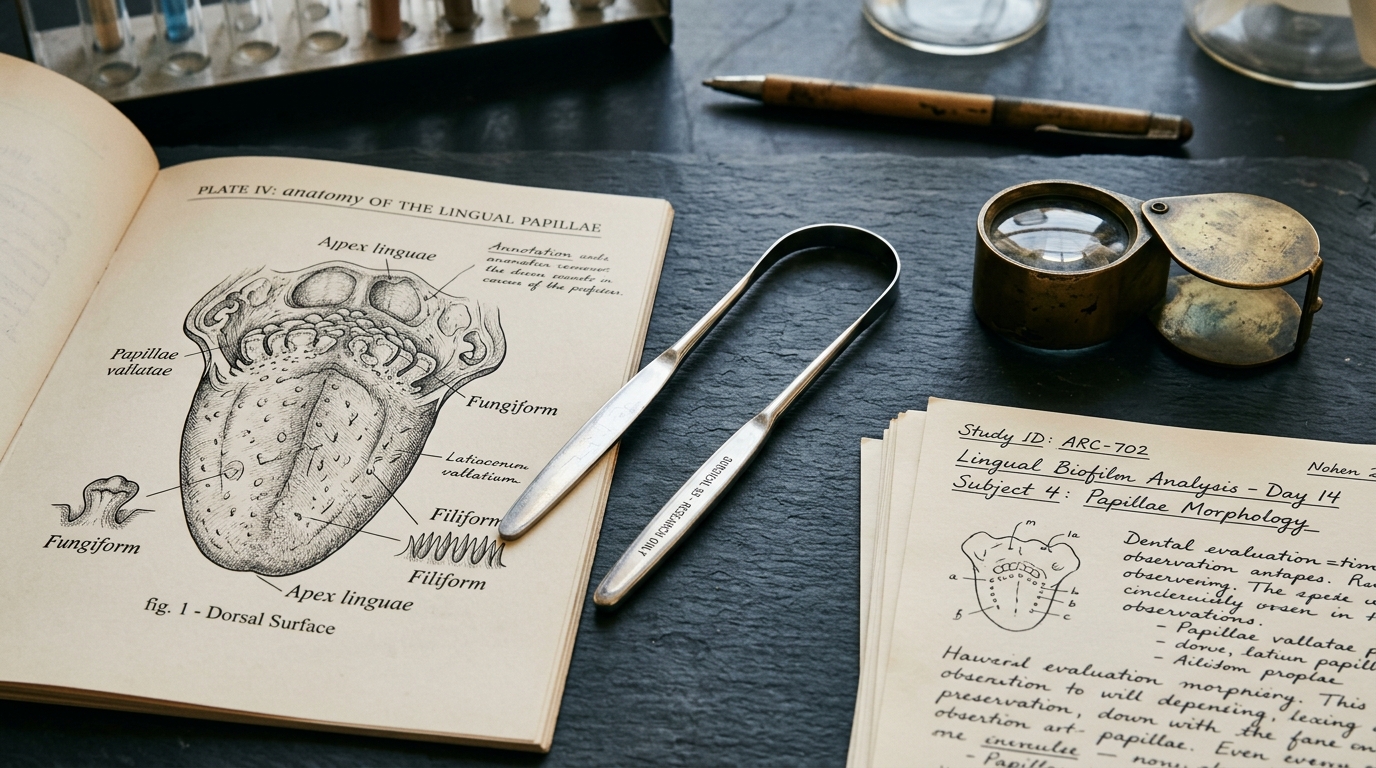
Tongue scrapers have evolved from a traditional hygiene tool into a prominent wellness fixture. Commercial promotions regularly portray mechanical scraping as an essential daily ritual, claiming that debriding the lingual dorsum permanently cures halitosis and eliminates oral bacteria.
Clinical dentistry presents a more measured assessment. The tongue dorsum is an important oral site where tongue coating and odor-associated bacteria can accumulate, but mechanical scraping is not a universal cure for mouth odor. Controlled clinical trials demonstrate that tongue cleaning produces a measurable, short-term reduction in volatile sulfur compound (VSC) laboratory surrogates and surface coating. However, systematic reviews consistently emphasize that the clinical evidence base remains constrained by small participant groups, short observation periods, and an absence of data demonstrating permanent halitosis resolution.
Understanding whether to use a tongue scraper for bad breath requires separating laboratory surrogate markers from patient-centered outcomes, and distinguishing routine morning breath from underlying dental disease.
Context: Independent consumer oral health education, not individualized medical or dental diagnosis. Persistent breath malodor warrants clinical evaluation by a licensed dental professional.
Editorial Standards: MouthMetric maintains complete commercial independence. We accept zero corporate sponsorships, host no affiliate links, and evaluate oral care interventions strictly against published peer-reviewed clinical research. Review our editorial policy and research methodology.
Do Tongue Scrapers Actually Help Bad Breath?
A tongue scraper can temporarily reduce breath malodor, but its clinical impact is limited in duration and scope. The instrument operates mechanically, sweeping away the organic residue—clinically termed tongue coating—that gathers on the dorsal tongue surface.
The Anatomy of Tongue Coating
The dorsal surface of the tongue is covered by minute papillae, predominantly slender filiform papillae. The microscopic grooves between these papillae provide a low-oxygen environment where shed oral epithelial cells, salivary proteins, food debris, and anaerobic bacteria gather to form a visible coating.
How Malodor Compounds Are Formed
Within this coating, anaerobic bacteria break down sulfur-containing amino acids—principally cysteine and methionine—derived from proteins in saliva and food. This process releases volatile sulfur compounds (VSCs):
- Hydrogen sulfide (H₂S): The principal gas associated with physiological tongue-coating odor and routine morning breath.
- Methyl mercaptan (CH₃SH): A pungent sulfur compound commonly elevated in active periodontal inflammation.
- Dimethyl sulfide ((CH₃)₂S): A volatile compound detected in breath odor and certain non-oral conditions.
A tongue scraper acts mechanically. Drawing the edge forward across the tongue surface lifts and removes this soft coating before bacteria can continue breaking down sulfur compounds into odorous gases.
However, mechanical cleaning does not sterilize oral tissues. Salivary proteins quickly recoat the tongue, epithelial cells continue to shed, and oral bacteria readily repopulate the surface. As a result, tongue cleaning produces a temporary reduction in odor-associated compounds rather than a permanent solution for bad breath.
What the Clinical Evidence Shows
Evaluating the clinical evidence on using a tongue scraper for bad breath requires distinguishing between surrogate laboratory measurements and true patient-centered clinical outcomes.
Most published trials evaluate tongue scrapers by measuring gas concentrations in parts per billion (ppb) using portable monitors (such as a Halimeter) or gas chromatography. While an immediate drop in exhaled sulfur compounds confirms fewer gas molecules were detected during testing, it does not establish that a patient’s chronic halitosis has been resolved. True clinical outcomes require blinded organoleptic assessments—direct evaluation by calibrated human judges—and validated quality-of-life evaluations tracked over extended periods.
Systematic Reviews and Evidence Quality
Systematic reviews provide the most rigorous assessment of mechanical tongue cleaning:
- The 2006 Cochrane Review by Outhouse et al. identified two randomized controlled trials (40 participants) showing a slight VSC reduction advantage for scrapers over toothbrushes, but highlighted an absence of long-term data.
- The 2019 Cochrane Review by Kumbargere Nagraj et al. examined tongue cleaning alongside other interventions (46 participants) and observed a minor reduction in organoleptic malodor (-0.20 on a multi-point scale), rating the overall certainty of evidence as very low due to small sample cohorts and brief follow-up windows.
- A 2010 systematic review by Van der Sleen et al. in the International Journal of Dental Hygiene confirmed that mechanical cleaning reduces visible coating and breath malodor, with tongue scrapers showing a slight edge over toothbrushes in reducing volatile sulfur compounds.
| Measured Outcome | What Clinical Evidence Demonstrates | Certainty & Limitations | Key Sources |
|---|---|---|---|
| Volatile Sulfur Compounds (VSCs) | Acute reduction in exhaled sulfur gas immediately following cleaning. | Moderate certainty for acute reduction. Effect is temporary; gases rebound within hours. | Outhouse (2006); Pedrazzi (2004) |
| Visible Tongue Coating Score | Statistically significant reduction in dorsal biofilm area and thickness. | Moderate certainty. Biofilm re-accumulates over 24 to 48 hours. | Van der Sleen (2010); Dwivedi (2019) |
| Organoleptic Odor (Human Judge) | Modest, minor reduction in clinician-evaluated breath malodor ratings. | Low to very low certainty. Limited by small sample cohorts (40–46 participants). | Kumbargere Nagraj (2019) |
| Long-Term Halitosis Resolution | No clinical evidence that scraping alone permanently cures chronic halitosis. | Insufficient evidence. Chronic malodor typically stems from periodontal pockets or decay. | Cochrane Reviews (2006, 2019); ADA |
For a comprehensive explanation of how oral bacteria produce distinct malodor profiles, read our clinical overview on what causes bad breath.
Tongue Scraping vs. Tongue Brushing
A practical question for consumers is whether investing in a dedicated tongue scraper offers any demonstrable advantage over brushing the tongue with a standard manual toothbrush.
What Comparative Trials Show
In 2004, a crossover clinical trial in the Journal of Periodontology (Pedrazzi et al.) compared a plastic tongue scraper against a soft-bristled manual toothbrush in 10 healthy adult participants, measuring immediate post-cleaning VSCs via Halimeter. The scraper achieved a 75% acute reduction in volatile sulfur compound readings compared to 45% for the toothbrush.
While statistically significant in that trial, this finding cannot be generalized as a guaranteed 75% breath improvement for consumers. It represents an immediate surrogate reading under controlled conditions in a 10-person cohort. Subsequent systematic reviews confirm that dedicated scrapers show a modest advantage over brushes for acute VSC reduction, but differences in ongoing daily freshness remain small.
Mechanical and Practical Differences
Scrapers and toothbrushes remove tongue coating differently, and some small studies have found greater short-term reductions in VSC measurements with scrapers. This does not establish a clinically important long-term advantage.
In everyday use, practical differences involve design and comfort:
- Contact Surface: Toothbrush bristles are designed for cleaning convex enamel surfaces, whereas scrapers provide a continuous curved edge designed to collect and lift surface coating from the tongue dorsum.
- Profile and Gag Reflex: The posterior tongue dorsum is sensitive to gagging. Some individuals find that the lower vertical profile of a tongue scraper makes it easier to reach the posterior dorsum without contacting the palate.
Does Tongue Scraper Material Matter?
Tongue scrapers are manufactured primarily in stainless steel, copper, and molded plastic. Commercial marketing frequently claims that copper possesses natural properties to purify breath, or that plastic devices are ineffective. Clinical research does not support these claims.
What the Research Shows
In 2019, a randomized comparative clinical trial published in The Journal of Contemporary Dental Practice (Dwivedi et al.) evaluated multiple tongue cleaning aids in reducing tongue coating and bacterial load. All tested scrapers achieved significant reductions in coating scores, and plastic tongue cleaners achieved the maximum reduction in bacterial load in that trial.
The clinical takeaway is that mechanical debridement drives effectiveness, not metallic composition. Available human evidence does not establish that copper or stainless steel produces superior breath freshness compared to plastic.
Objective Comparison of Scraper Materials
| Scraper Material | Physical Characteristics | Human Clinical Breath Evidence | Practical Longevity & Care |
|---|---|---|---|
| Stainless Steel | Rigid, non-porous, corrosion-resistant. Dishwasher-safe and boilable. | Equivalent mechanical coating removal. No chemical bactericidal action on breath. | Highest durability. Lasts indefinitely without warping or cracking. |
| Pure Copper | Demonstrates contact antimicrobial effect on dry surfaces in vitro. | No human clinical trials demonstrate superior breath freshening or VSC reduction in vivo. | Moderate durability; high care. Forms a dark tarnish patina requiring acidic polishing. |
| Molded Plastic | Lightweight, flexible, gentle on soft mucosal tissues. Low cost. | Achieved microbial load reductions equal to or greater than metal tools (Dwivedi 2019). | Lower longevity. Develops micro-scratches over time; requires periodic replacement. |
Consumers should select scrapers based on comfort, ergonomic handling, and personal preference over claims of medicinal superiority. Stainless steel offers enduring durability, while flexible plastic provides a softer feel. For complete oral hygiene guidance, read how to get rid of bad breath.
How to Use a Tongue Scraper
Using a tongue scraper correctly requires gentle technique. Applying excessive downward force does not improve breath outcomes and can irritate delicate mucosal tissues. Dental professionals recommend the following conservative method:
- Extend and Relax: Extend your tongue comfortably forward. Keep lingual muscles relaxed to expose inter-papillary crevices.
- Position Posteriorly: Place the curved edge toward the rear dorsum. Begin only as far back as comfortable without gagging.
- Sweep Forward Lightly: Use light, comfortable pressure. The scraper should remove coating without causing pain, soreness, or bleeding. Draw the blade forward to the tip in a single continuous stroke, sweeping from the back toward the front.
- Rinse and Repeat: Rinse accumulated debris off the blade under running tap water. Repeat as needed to clean coated areas comfortably, without repeatedly scraping the same tissue.
- Clean and Store: Wash the scraper thoroughly with warm water and mild soap after each use. Dry completely and store upright.
Technique Rules: Never scrape aggressively; redness or pinpoint bleeding indicates excessive pressure. If posterior placement triggers a gag reflex, start mid-tongue and advance gradually over several days while exhaling slowly.
How Often Should You Clean Your Tongue?
There is no universally established clinical schedule for tongue scraping. Clinical trials evaluating changes in volatile sulfur compounds have typically examined once-daily or twice-daily protocols, but available evidence does not establish an optimal medical frequency.
Gentle tongue cleaning can be incorporated into a person’s normal oral-hygiene routine according to personal comfort and device instructions:
- Morning Cleaning: Many people choose to clean the tongue in the morning. Salivary flow naturally decreases during sleep, allowing surface coating and odor-related compounds to accumulate overnight.
- Routine Oral Hygiene: Others choose to clean the tongue when brushing their teeth in the morning or evening.
Scraping repeatedly throughout the day is unnecessary and increases the likelihood of mucosal irritation without providing additional breath freshness. Daily tongue cleaning remains a supportive personal hygiene habit rather than a proven cure for chronic halitosis.
Can Tongue Scraping Cause Problems?
When performed gently using a smooth, well-maintained instrument, tongue scraping carries low clinical risk. Most avoidable problems are associated with excessive pressure, repeated scraping of irritated tissue, or poor device hygiene.
Potential Adverse Effects
- Papillary Micro-Trauma: Filiform papillae have delicate tips and rich capillary beds. Heavy downward pressure causes localized tenderness, abrasion, or petechiae (pinpoint capillary bleeding).
- Temporary Taste Blunting (Dysgeusia): Gustatory receptors reside within fungiform and circumvallate papillae. Aggressive scraping that inflames these tissues can transiently dull taste perception.
- Microbial Contamination: Neglecting to wash and dry a scraper can turn it into a bacterial fomite. Damaged plastic scrapers with surface nicks can harbor microbes over time.
When to Pause Tongue Cleaning
Temporarily suspend mechanical tongue cleaning during active oral conditions:
- Aphthous Ulcers (Canker Sores): Mechanical contact delays healing and causes acute pain.
- Oral Thrush (Candidiasis): Scraping candidal lesions can irritate inflamed mucosa. Suspected oral thrush should be assessed by a healthcare professional rather than treated by repeatedly scraping the affected tissue.
- Active Geographic Tongue: Inflamed, sensitive patches with raised borders sting under mechanical contact.
- Post-Surgical Healing: Avoid mechanical manipulation after extractions or periodontal procedures until tissues fully heal.
When Tongue Scraping Isn’t Enough
A tongue scraper is a surface-level maintenance tool. It manages volatile sulfur compounds generated on the upper surface of the tongue, but cannot resolve bad breath originating from deeper oral structures or systemic sources.
Most persistent halitosis is associated with oral causes, although non-oral causes can also occur. While the tongue dorsum participates in many of these cases, it may simply collect bacteria and debris rather than serving as the root source of the problem:
- Subgingival Periodontal Pockets: Deep pockets harbor anaerobic bacteria releasing pungent methyl mercaptan. Tongue scraping cannot reach into subgingival pockets, and tongue cleaning cannot treat periodontal disease. Persistent gum bleeding or other periodontal symptoms warrant professional dental evaluation.
- Active Dental Caries: Cavitated lesions trap decomposing debris and bacteria, generating continuous malodor.
- Defective Restorations: Overhanging margins and ill-fitting crowns harbor bacteria beyond mechanical reach.
- Chronic Xerostomia (Dry Mouth): Diminished salivary flow substantially reduces natural oral cleansing, allowing bacteria and odor-related compounds to accumulate.
Non-Oral Sources: Non-oral contributors can include tonsilloliths (tonsil stones lodged in tonsillar crypts), chronic sinusitis, severe post-nasal drip, gastroesophageal reflux, or underlying metabolic conditions.
When Should You See a Dentist?
Bad breath is a clinical symptom, not an independent disease. While transient morning breath or dietary odor responds to routine hygiene, persistent or recurrent malodor warrants a comprehensive professional examination.
You should arrange an evaluation with a licensed dental professional if you notice:
- Persistent or Recurrent Malodor: Bad breath that continues despite several weeks of consistent daily tooth brushing, interdental flossing, and gentle tongue cleaning.
- Bleeding, Swollen, or Tender Gums: Gingival bleeding during brushing or flossing is a key sign of active periodontal inflammation.
- Gum Recession or Tooth Mobility: Changes in gum position, a persistent bad taste, or loose teeth indicate advancing periodontitis.
- Persistent Tooth Pain or Sensitivity: May indicate deep dental decay, a cracked tooth, or an infected dental pulp.
- Chronic Dry Mouth (Xerostomia): Reduced salivary flow destroys the mouth’s natural defense against odor-producing bacteria.
- Unexplained Oral Lesions: Any ulcer, sore, or white plaque that does not heal within two weeks requires prompt clinical examination.
A dentist conducts periodontal screenings, records pocket depths, takes diagnostic radiographs, and refers to medical specialists if systemic pathology is suspected.
Explore our Bad Breath Category Hub for our complete series of evidence-based guides on oral malodor science.
The Bottom Line
A tongue scraper is an inexpensive, accessible, and low-risk hygiene tool designed for a specific mechanical purpose: sweeping away accumulated mucus, dead epithelial cells, and superficial bacteria from the lingual papillae.
Controlled clinical trials confirm that scraping the tongue produces an immediate, modest reduction in volatile sulfur compound readings and visible coating, outperforming a standard manual toothbrush in short-term laboratory measurements. For many people, incorporating a brief morning scrape improves oral comfort and breath freshness.
However, clinical evidence does not support commercial claims that tongue scrapers permanently cure chronic halitosis, eradicate oral bacteria, or detoxify the body. Available human evidence does not establish that one scraper material produces superior breath outcomes.
Using a tongue scraper for bad breath is a helpful supportive element of a well-rounded oral hygiene routine. It complements twice-daily tooth brushing with fluoride toothpaste and daily interdental flossing, but it cannot replace either practice—and it is not a substitute for a professional dental evaluation when bad breath persists.
Sources and Methodology
MouthMetric maintains strict evidence-first editorial standards. Every clinical statement in this guide is derived from systematic reviews, controlled clinical trials, and institutional dental guidance:
- Cochrane Systematic Review (2006): Outhouse TL, et al. Tongue scraping for treating halitosis. Cochrane Database Syst Rev, CD005519. PubMed PMID: 16625641.
- Cochrane Systematic Review (2019): Kumbargere Nagraj S, et al. Interventions for managing halitosis. Cochrane Database Syst Rev, CD012213. PubMed PMID: 31828775.
- Van der Sleen et al. (2010): Effectiveness of mechanical tongue cleaning on breath odour and tongue coating: a systematic review. Int J Dent Hyg, 8(4), 258–268. PubMed PMID: 20961381.
- Pedrazzi et al. (2004): Tongue-cleaning methods: a comparative clinical trial. J Periodontol, 75(7), 1009–1012. PubMed PMID: 15341360.
- Dwivedi et al. (2019): Effectiveness of Various Tongue Cleaning Aids in the Reduction of Tongue Coating and Bacterial Load. J Contemp Dent Pract, 20(4), 444–448. PubMed PMID: 31391398.
- Tangerman & Winkel (2007): Intra- and extra-oral halitosis. J Periodontol, 78(11), 2113–2120. PubMed PMID: 17970678.
- Seemann et al. (2001): Evaluation of tongue cleaning devices. J Clin Dent, 12(4), 101–104. PubMed PMID: 11797305.
- American Dental Association (ADA): Halitosis and Tongue Scrapers. MouthHealthy Oral Health Topics. mouthhealthy.org/tongue-scrapers.
- National Health Service (NHS UK): Bad breath (halitosis) guidance. NHS Conditions. nhs.uk/conditions/bad-breath.
Sources
- Cochrane Database of Systematic Reviews (2006) — Tongue scraping for treating halitosis (Outhouse et al.) — accessed 2026-09-26
- Cochrane Database of Systematic Reviews (2019) — Interventions for managing halitosis (Kumbargere Nagraj et al.) — accessed 2026-09-26
- International Journal of Dental Hygiene (2010) — Effectiveness of mechanical tongue cleaning on breath odour and tongue coating (Van der Sleen et al.) — accessed 2026-09-26
- Journal of Periodontology (2004) — Tongue-cleaning methods: a comparative clinical trial (Pedrazzi et al.) — accessed 2026-09-26
- The Journal of Contemporary Dental Practice (2019) — Effectiveness of Various Tongue Cleaning Aids (Dwivedi et al.) — accessed 2026-09-26
- Journal of Periodontology (2007) — Intra- and extra-oral halitosis (Tangerman & Winkel) — accessed 2026-09-26
- Journal of Clinical Dentistry (2001) — Evaluation of tongue cleaning devices (Seemann et al.) — accessed 2026-09-26
- American Dental Association (ADA) — Halitosis and Tongue Scrapers (MouthHealthy) — accessed 2026-09-26
- National Health Service (NHS UK) — Bad breath (halitosis) guidance — accessed 2026-09-26