LearnBad Breath
Mouthwash for Bad Breath: What Ingredients Actually Work?
Explore peer-reviewed clinical evidence on mouthwash for bad breath. Compare active ingredients like zinc, CPC, and chlorine dioxide with cosmetic rinses.
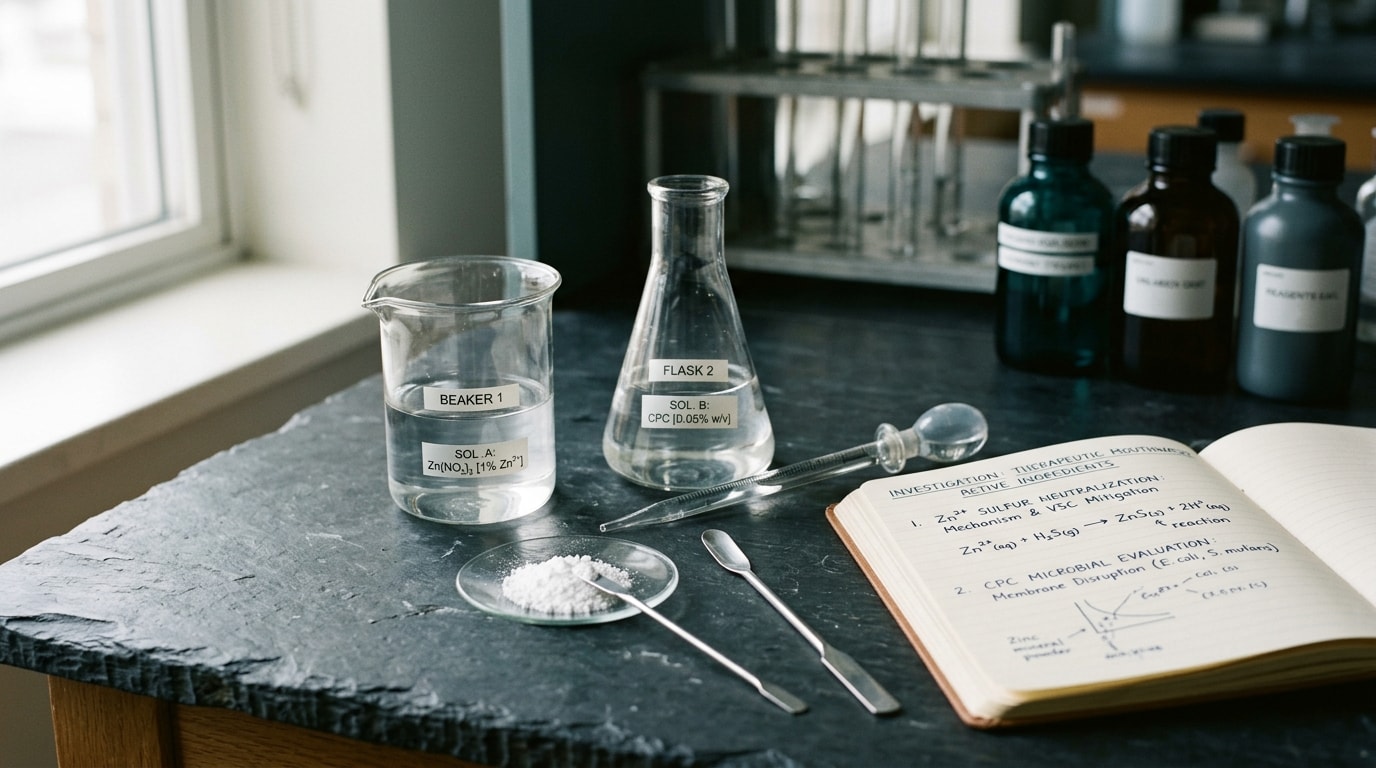
Mouthwash occupies an unusual position in consumer oral care. Pharmacy shelves display dozens of formulas promising instant freshness and lasting protection, often suggesting that an invigorating swish provides a definitive solution to bad breath.
Clinical dentistry views the category with far greater nuance. A mouthwash cannot cure chronic halitosis, rebuild periodontal tissues, or permanently alter the oral microbiome. However, therapeutic rinses with specific active agents can serve as helpful daily adjuncts by neutralizing volatile sulfur gases and temporarily suppressing bacterial activity.
Evaluating mouthwash requires understanding what active ingredients achieve in clinical trials, how their mechanisms differ from cosmetic masking, and where self-care reaches its anatomical limits.
Does Mouthwash Actually Stop Bad Breath?
To determine whether mouthwash works, one must define the biological process being measured. Bad breath, or oral halitosis, arises primarily from anaerobic bacteria residing on the dorsal tongue, along gingival margins, and within periodontal crevices. These microorganisms hydrolyze sulfur-containing proteins and amino acids—predominantly cysteine and methionine—producing volatile sulfur compounds (VSCs). The primary gases responsible for malodor are hydrogen sulfide (H₂S), methyl mercaptan (CH₃SH), and dimethyl sulfide ((CH₃)₂S).
Commercial rinses approach this biology through four distinct mechanisms:
- Reducing bacterial load: Antimicrobial agents temporarily lower the viability of planktonic bacteria floating in saliva.
- Inhibiting bacterial enzymes: Specific chemicals interfere with the enzymes that break down proteins into sulfur precursors.
- Chemically neutralizing volatile gases: Metal ions and oxidizing agents react directly with sulfur molecules, converting volatile gases into non-volatile, odorless compounds.
- Masking odors aromatically: Flavoring oils introduce strong scents that briefly overpower ambient malodor.
These pathways produce very different clinical outcomes. Rinsing with a cosmetic product may mask odors for twenty to sixty minutes without altering sulfur generation. In contrast, therapeutic rinses containing validated chemical neutralizers can suppress measurable VSC concentrations for several hours.
Neither approach eliminates chronic halitosis at its root. Antimicrobial rinses leave deep biofilm structures largely undisturbed. Within hours, surviving bacteria replicate, salivary proteins replenish the oral environment, and sulfur production gradually returns to baseline. Mouthwash provides transient chemical management, not permanent eradication.
Which Mouthwash Ingredients Have the Best Evidence?
Over-the-counter mouthwashes vary substantially in chemical formulation. While cosmetic rinses rely on water, ethanol, and flavoring, therapeutic rinses incorporate specific agents evaluated in randomized controlled trials and systematic reviews.
Understanding how each ingredient works helps separate biological activity from marketing claims.
Zinc Compounds
Zinc salts—most commonly zinc acetate, zinc lactate, and zinc gluconate—represent one of the most thoroughly investigated chemical classes for oral malodor. Rather than destroying bacterial cell walls, zinc acts primarily through direct chemical neutralization.
Divalent zinc ions (Zn²⁺) have a high affinity for sulfur radicals. When zinc encounters volatile sulfur compounds in oral fluid, it binds directly to the free sulfhydryl (−SH) groups of hydrogen sulfide and methyl mercaptan. This reaction forms insoluble, non-volatile zinc mercaptides, chemically preventing odorous gases from escaping into exhaled air.
Beyond gas binding, zinc inhibits bacterial enzyme systems involved in amino acid cleavage, slowing down the synthesis of new VSCs.
Clinical trials consistently demonstrate that zinc-containing rinses produce statistically significant reductions in both instrumental VSC measurements and organoleptic scores. Systematic reviews from the Cochrane Collaboration confirm zinc’s efficacy in reducing oral malodor parameters.
The main limitation of zinc is its narrow activity: while it excels at neutralizing sulfur chemistry, zinc alone exerts only modest antimicrobial action against structured dental plaque. For this reason, formulations frequently combine zinc with complementary antiseptics, such as cetylpyridinium chloride or low-concentration chlorhexidine, to achieve dual chemical and antimicrobial action.
Cetylpyridinium Chloride (CPC)
Cetylpyridinium chloride is a quaternary ammonium compound widely utilized in over-the-counter therapeutic rinses. It functions as a cationic surface-active antiseptic.
The mechanism of CPC relies on electrical attraction. Because bacterial cell membranes carry a net negative electrical charge, positively charged CPC molecules bind to bacterial surfaces. This interaction disrupts membrane permeability, causes cellular leakage, inhibits bacterial metabolism, and leads to cell lysis.
In clinical trials evaluating plaque and malodor, CPC formulations (typically 0.05% to 0.075%) demonstrate measurable reductions in salivary bacterial counts, morning breath intensity, and VSC levels. A systematic review in the International Journal of Dental Hygiene confirmed consistent breath-freshening benefits over placebo controls.
However, clinical efficacy depends heavily on formulation stability. CPC’s bioavailability can be significantly reduced by other ingredients in the bottle, particularly certain anionic surfactants. Effective CPC rinses must be formulated to keep the molecule chemically available. Potential side effects include minor extrinsic tooth staining and transient taste alteration, though both occur far less frequently than with chlorhexidine.
Chlorine Dioxide
Chlorine dioxide (ClO₂) and stabilized sodium chlorite formulations address oral malodor through oxidative chemistry. Rather than relying solely on cell membrane disruption, chlorine dioxide acts as a selective oxidant.
In the oral environment, chlorine dioxide oxidizes volatile sulfur compounds, rapidly converting hydrogen sulfide and methyl mercaptan into non-volatile, odorless sulfate and sulfonate derivatives. It also oxidizes cysteine and methionine precursors, depriving anaerobic bacteria of the raw materials required for sulfur production.
Clinical trials support this mechanism. A double-blind crossover trial published in Trials by Shinada and colleagues demonstrated that rinsing with a stabilized chlorine dioxide formula significantly reduced hydrogen sulfide, methyl mercaptan, and total VSCs compared to placebo, with effects lasting several hours.
Despite these findings, the body of independent systematic reviews for chlorine dioxide remains smaller than that for zinc or traditional antiseptics. Commercial products labeled “stabilized chlorine dioxide” typically contain sodium chlorite (NaClO₂) buffered with citrate or phosphate; the degree of active gas released depends on the bottle’s pH and activation chemistry. While effective for reducing VSCs, claims that chlorine dioxide permanently sterilizes the mouth are unsupported.
Chlorhexidine
Chlorhexidine gluconate (typically 0.12% to 0.20%) is the established benchmark antiseptic in clinical periodontology for supragingival plaque control. Its dicationic structure binds strongly to oral tissues, providing prolonged substantivity—gradually releasing active antiseptic into saliva over eight to twelve hours.
In clinical trials on oral malodor, chlorhexidine produces substantial reductions in both organoleptic breath scores and instrumental VSC levels by suppressing the viable bacterial flora responsible for amino acid putrefaction.
Despite this potency, chlorhexidine is unsuitable for routine consumer breath management due to well-documented adverse effects:
- Extrinsic staining: Chlorhexidine binds with dietary chromogens (such as tea, coffee, and wine), forming tenacious brown stains on enamel, restorations, and the tongue.
- Dysgeusia: Patients frequently report temporary taste alteration or a persistent bitter sensation, particularly affecting salt perception.
- Calculus formation: Prolonged use accelerates supragingival calculus deposition.
- Microbial disturbance: Indiscriminate broad-spectrum suppression may disrupt commensal microbial communities that support mucosal health.
Consequently, clinical guidelines restrict chlorhexidine to short-term, dentist-directed therapeutic intervals—such as post-surgical healing or acute periodontal management. It should not be used as an everyday consumer rinse for routine bad breath.
Essential Oils
Formulations containing fixed combinations of essential oils—thymol, eucalyptol, menthol, and methyl salicylate—have been studied extensively for over four decades.
Essential oils work by disrupting bacterial cell membranes, denaturing proteins, and inhibiting bacterial enzyme activity. Clinical trials show they penetrate superficial layers of dental biofilm, significantly reducing supragingival plaque and gingival inflammation.
Regarding malodor, essential oil rinses lower VSC concentrations and improve organoleptic scores through a combined mechanism: antimicrobial reduction of odor-producing bacteria alongside persistent aromatic masking from the volatile oils.
The primary limitation of traditional essential oil rinses is their high alcohol content—frequently 20% to 27% ethanol—which serves as a solvent to maintain oil solubility. While alcohol-free alternatives using synthetic surfactants are now available, consumers sensitive to mucosal burning or dryness may find high-alcohol formulations uncomfortable.
Mouthwash vs. Breath Masking: What’s the Difference?
A frequent point of consumer confusion is distinguishing products that mask odor from those that exert therapeutic activity. The difference lies in biological and chemical targets.
+-----------------------------------------------------------------------------------+
|                           LEVELS OF BREATH MANAGEMENT                             |
+-----------------------------------------------------------------------------------+
|  1. Flavor Masking       Overrides odor with mint oils; VSCs continue to be       |
|                          produced unhindered. Duration: 20 to 60 minutes.         |
+-----------------------------------------------------------------------------------+
|  2. VSC Neutralization   Directly binds or oxidizes sulfur gases (e.g., Zinc,     |
|                          Chlorine Dioxide) into non-volatile salts.               |
|                          Duration: 3 to 8 hours.                                  |
+-----------------------------------------------------------------------------------+
|  3. Antimicrobial Action Reduces bacterial viability and enzyme activity          |
|                          (e.g., CPC, Chlorhexidine, Essential Oils).              |
|                          Slows down amino acid putrefaction.                      |
+-----------------------------------------------------------------------------------+
|  4. Etiological Control  Mechanical biofilm removal (brushing, flossing, tongue   |
|                          cleaning) plus professional care. Targets root causes.   |
+-----------------------------------------------------------------------------------+
Flavor masking relies on sensory compounds—such as menthol or peppermint—to overpower ambient malodor without altering underlying biology. Anaerobic bacteria continue fermenting proteins, and sulfur gases escape unhindered once the flavor dissipates.
Therapeutic activity, by contrast, targets either the sulfur molecules or the microorganisms producing them. Zinc chemically alters volatile thiols into non-volatile salts, while antimicrobial agents like CPC disrupt bacterial cell membranes to slow sulfur synthesis. Distinguishing between sensory masking and chemical neutralization prevents consumers from mistaking mint intensity for clinical efficacy.
Alcohol vs. Alcohol-Free Mouthwash
The debate surrounding alcohol in mouthwash is often reduced to simplistic slogans. Clinical evidence reveals a more nuanced picture.
Why Is Alcohol Used in Mouthwash?
In traditional rinses, ethanol is not the active odor-treating agent. Instead, it serves practical pharmaceutical functions:
- Solvent: Hydrophobic ingredients, particularly essential oils, do not dissolve in water; ethanol keeps them in stable solution.
- Preservative: Alcohol prevents microbial contamination within the bottle.
- Permeation enhancer: Ethanol can assist the penetration of active agents into superficial biofilm layers.
Oral Dryness and Salivary Defense
The primary clinical concern with alcohol-containing rinses is mucosal desiccation. Saliva represents the mouth’s natural defense against malodor: it continually clears cellular debris, buffers acids, provides antimicrobial proteins, and keeps volatile gases dissolved in fluid.
High concentrations of alcohol (14% to 26%) can extract moisture from oral tissues and reduce salivary flow in susceptible individuals. When salivary flushing diminishes, volatile sulfur gases evaporate more readily into exhaled air. For individuals prone to dry mouth—whether from medications, mouth breathing, or aging—frequent rinsing with high-alcohol products can paradoxically worsen breath odor once the initial flavor dissipates.
Is Alcohol-Free Automatically Superior?
Modern alcohol-free rinses use alternative emulsifiers to stabilize active ingredients without ethanol. However, omitting alcohol does not automatically guarantee superior performance:
- For individuals with normal salivary flow who tolerate alcohol formulas comfortably, established alcohol-based essential oil rinses remain clinically effective for plaque and gingivitis reduction.
- An alcohol-free rinse lacking proven active agents (such as zinc, CPC, or chlorine dioxide) will not outperform a therapeutic rinse simply because it omits alcohol.
For consumers with xerostomia, mucosal sensitivity, oral lichen planus, or a history of alcohol dependency, alcohol-free therapeutic rinses are the clinically appropriate choice. For others, the specific active ingredient matters far more than the presence or absence of ethanol alone.
How Mouthwash Fits Into Daily Oral Hygiene
A mouthwash cannot replace physical plaque removal. In clinical dentistry, chemical rinses are categorized strictly as adjuncts—supplementary tools designed to support, but never substitute for, mechanical hygiene.
Dental plaque is a structured, polymicrobial biofilm. Bacteria within biofilm shield themselves behind an extracellular matrix that resists fluid swishing. Swishing an aqueous solution exerts minimal shear force; it cannot dislodge adherent colonies from interdental spaces, gingival margins, or deep lingual crevices.
The foundation of daily oral hygiene remains mechanical:
- Tooth brushing: Twice daily with fluoridated toothpaste to disrupt supragingival plaque.
- Interdental cleaning: Daily flossing or interdental brushes to clear debris between teeth.
- Tongue debridement: Cleaning the dorsal tongue to remove accumulated anaerobic bacteria and food debris.
       MECHANICAL BIOFILM REMOVAL                CHEMICAL ADJUNCT
       ==========================                ================

       [Tooth Brushing]                          [Therapeutic Mouthwash]
              +                                            |
       [Interdental Flossing]                              v
              +                           Neutralizes free sulfur gases
       [Tongue Debridement]               Slows planktonic bacterial regrowth
              |                                            |
              v                                            v
     Physically dislodges                     Provides temporary chemical
     the dense biofilm matrix                 suppression in oral fluid
Mechanical tongue cleaning is especially important for breath management. As detailed in our clinical review of tongue scrapers for bad breath, the anatomical crevices of the lingual papillae harbor the primary reservoir of sulfur-producing bacteria. Mechanical debridement physically clears the thick coating where these organisms thrive.
When paired together, mechanical cleaning and chemical rinsing complement each other logically. Scraping removes the bulk coating, exposing residual bacteria. Rinsing immediately afterward allows therapeutic agents like zinc or CPC to contact exposed surfaces directly, neutralizing remaining sulfur gases and delaying bacterial repopulation.
How the Evidence Compares
The comparison matrix below summarizes clinical evidence, primary mechanisms, limitations, and practical roles for major mouthwash ingredient classes.
| Active Ingredient | Primary Proposed Effect | Evidence for Breath Outcomes | Important Limitations | Typical Role |
|---|---|---|---|---|
| Zinc Compounds (Acetate, Lactate, Gluconate) | Chelates volatile sulfur thiols (−SH); inhibits proteolytic enzymes | Stronger evidence (Multiple RCTs; Cochrane review confirmation of VSC suppression) | Modest standalone antibacterial action against established dental plaque | Daily chemical VSC neutralization; ideal combined with mild antiseptics |
| Cetylpyridinium Chloride (CPC) (0.05%–0.075%) | Cationic antiseptic; disrupts bacterial membranes and lowers bacterial counts | Moderate evidence (Documented reductions in VSCs, salivary bacteria, and morning malodor) | Bioavailability depends on formulation; minor risk of superficial staining | Daily antiseptic rinse for breath freshness and plaque control |
| Chlorine Dioxide / Sodium Chlorite | Oxidizes volatile sulfur gases into non-volatile sulfates; oxidizes amino acid precursors | Moderate evidence (Blinded crossover RCTs show significant short-term VSC reductions) | Fewer large systematic reviews than zinc; activation chemistry varies by bottle | Targeted VSC reduction; useful for patients avoiding intense mint flavors |
| Essential Oils (Thymol, Menthol, Eucalyptol) | Disrupts bacterial cell membranes; provides persistent aromatic masking | Moderate evidence (Proven plaque and gingivitis reduction; combined antibacterial and masking effect) | Traditional formulas contain high alcohol (up to 27%); intense taste sensations | Plaque and gingivitis control with concurrent breath-freshening benefits |
| Chlorhexidine Gluconate (0.12%–0.20%) | Broad-spectrum antiseptic with high oral substantivity (8–12 hours) | Stronger evidence (Rapid, marked reduction in bacterial counts and breath malodor) | Tenacious brown tooth staining; altered taste sensation; accelerates calculus deposition | Short-term clinical therapy directed by a dentist; unsuitable for daily consumer use |
| Cosmetic Rinses (Water, Flavoring, Alcohol) | Aromatic masking of exhaled air | Insufficient evidence (No meaningful impact on VSC production or bacterial counts) | Transient effect (20–60 minutes); high alcohol content may exacerbate dryness | Superficial short-term freshening; no therapeutic oral health benefit |
Note: Classifications reflect peer-reviewed systematic reviews, randomized controlled trials, and clinical guidelines. They do not constitute commercial product endorsements.
When Mouthwash Isn’t Enough
While mouthwash can be a helpful hygiene adjunct, persistent bad breath frequently signals an underlying dental or medical condition that over-the-counter rinses cannot address.
Understanding these boundaries helps clarify when professional evaluation is necessary.
Deep Periodontal Pockets
Periodontitis is a leading cause of chronic oral malodor. Healthy gingival sulci measure one to three millimeters deep, but periodontal disease creates deep pockets extending four to nine millimeters or more. These subgingival spaces harbor aggressive anaerobic bacteria that metabolize proteins from crevicular fluid. Swishing rinse penetrates only zero to two millimeters subgingivally; it cannot reach the base of diseased pockets. Masking periodontitis with mouthwash while bone loss quietly progresses poses a serious clinical risk.
Tonsil Stones (Tonsilloliths)
Palatine tonsils contain crevices called tonsillar crypts where shed epithelial cells, debris, and anaerobic bacteria accumulate, occasionally calcifying into tonsil stones (tonsilloliths). These formations generate intense volatile sulfur compounds. Because tonsils reside in the pharynx behind the oral cavity, oral swishing cannot reach them, and gargling reaches only superficial tissue without penetrating deep crypts.
Systemic and Extra-Oral Causes
Approximately 10% of halitosis cases originate outside the oral cavity:
- Chronic rhinosinusitis and post-nasal drip: Mucopurulent secretions coating the posterior pharynx provide substrate for sulfur-producing bacteria.
- Gastroesophageal reflux disease (GERD): Acid and gastric gases can produce noticeable odors.
- Metabolic conditions: Uncontrolled diabetes can produce sweet, acetone-scented breath; renal dysfunction can yield an ammonia-like odor; advanced hepatic insufficiency can generate a sulfurous scent (fetor hepaticus).
- Medication-induced xerostomia: Hundreds of common medications—including antihypertensives, antidepressants, antihistamines, and diuretics—reduce salivary flow, causing secondary malodor.
+-----------------------------------------------------------------------------------+
|                        CLINICAL REFERRAL INDICATORS                               |
+-----------------------------------------------------------------------------------+
| Consult a licensed dentist or physician if bad breath exhibits any of the        |
| following characteristics:                                                        |
|                                                                                   |
| • Persists continuously for more than two weeks despite diligent brushing,        |
|   flossing, and tongue cleaning                                                   |
| • Accompanied by gums that bleed during brushing or eating                        |
| • Associated with persistent gum swelling, tenderness, or tooth mobility           |
| • Accompanied by a persistent foul or metallic taste in the mouth                  |
| • Accompanied by visible white formations in the tonsils or persistent throat pain|
| • Accompanied by chronic severe dry mouth that impairs swallowing or speaking      |
+-----------------------------------------------------------------------------------+
What to Look for on a Mouthwash Label
Rather than relying on brand claims or marketing slogans, consumers can evaluate products systematically using the following framework:
1. Identify the Active Ingredients
Check the “Active Ingredients” box on the drug facts label (or primary ingredient list for cosmetic formulas) for proven therapeutic agents:
- For direct sulfur gas neutralization: Look for zinc compounds (zinc acetate, zinc lactate, zinc gluconate) or stabilized chlorine dioxide / sodium chlorite.
- For antimicrobial suppression: Look for cetylpyridinium chloride (CPC) or essential oil combinations.
- If the only ingredients listed are water, alcohol, glycerin, and flavoring, the product is a cosmetic masking rinse.
2. Check the Alcohol Content
Evaluate whether the formula is labeled “alcohol-free.” If you experience morning dry mouth, take medications that decrease saliva, or have sensitive gums, selecting an alcohol-free therapeutic rinse helps prevent mucosal irritation and moisture loss.
3. Look for Independent Professional Validation
Check whether the product carries the American Dental Association (ADA) Seal of Acceptance specifically for bad breath. To earn the ADA Seal for halitosis, manufacturers must submit clinical studies demonstrating that their formula significantly reduces oral malodor beyond a placebo control without harming oral tissues.
4. Review Warnings and Usage Instructions
- Follow recommended rinsing times (typically 30 to 60 seconds) so active agents have sufficient time to interact with oral surfaces.
- Avoid swallowing mouthwash.
- For chlorhexidine rinses, use only under direct clinical supervision for the specified duration to avoid dental staining.
The Bottom Line
Mouthwash can be a useful addition to daily oral hygiene when consumers hold realistic expectations about what chemical swishing achieves:
- Mouthwash does not cure bad breath: Rinses provide transient improvements lasting from a few hours up to eight hours depending on the active agent. They do not permanently alter oral microbiology or eliminate established biofilm.
- Active ingredients matter: Rinses containing zinc compounds, cetylpyridinium chloride, stabilized chlorine dioxide, or essential oils demonstrate measurable reductions in volatile sulfur compounds and malodor. Formulas without therapeutic agents provide only brief flavor masking.
- Mechanical hygiene comes first: Brushing, flossing, and tongue cleaning physically disrupt the bacterial colonies where sulfur gases originate. Mouthwash works best as an adjunct following mechanical cleaning, not as a substitute.
- Alcohol is a solvent, not an active cure: Ethanol is used primarily to dissolve hydrophobic ingredients. For individuals prone to dry mouth, high-alcohol rinses can exacerbate dryness and worsen breath odors over time. Alcohol-free therapeutic formulas offer a safer profile for dry-mouth sufferers.
- Persistent malodor warrants professional evaluation: If breath odor persists beyond two weeks despite consistent oral hygiene, or is accompanied by bleeding gums, pain, or dry mouth, schedule an evaluation with a dentist. Mouthwash cannot treat subgingival periodontitis, tonsil stones, or systemic health conditions.
Sources
- Cochrane Database of Systematic Reviews (2019) — Interventions for managing halitosis (Kumbargere Nagraj et al.) — accessed 2026-09-27
- Cochrane Database of Systematic Reviews (2008) — Mouthrinses for the treatment of halitosis (Fedorowicz et al.) — accessed 2026-09-27
- Journal of Clinical Periodontology (2003) — Clinical effects of a new mouthrinse on oral halitosis (Winkel et al.) — accessed 2026-09-27
- Journal of Clinical Periodontology (2003) — Combined effect of zinc and chlorhexidine on volatile sulfur compounds (Young et al.) — accessed 2026-09-27
- Trials (2010) — Effects of a mouthwash containing chlorine dioxide on oral malodor (Shinada et al.) — accessed 2026-09-27
- International Journal of Dental Hygiene (2012) — The effect of mouthrinses on oral malodor: a systematic review (Blom et al.) — accessed 2026-09-27
- American Dental Association (ADA) — Oral Health Topics: Halitosis & Product Acceptance — accessed 2026-09-27
- National Health Service (NHS UK) — Bad breath (halitosis) guidance — accessed 2026-09-27