LearnTeeth Whitening
In-Office vs. At-Home Teeth Whitening: Clinical Differences in Results and Sensitivity
Compare in-office and at-home teeth whitening using clinical meta-analyses. Learn how treatment speed, final color shade, and tooth sensitivity compare.
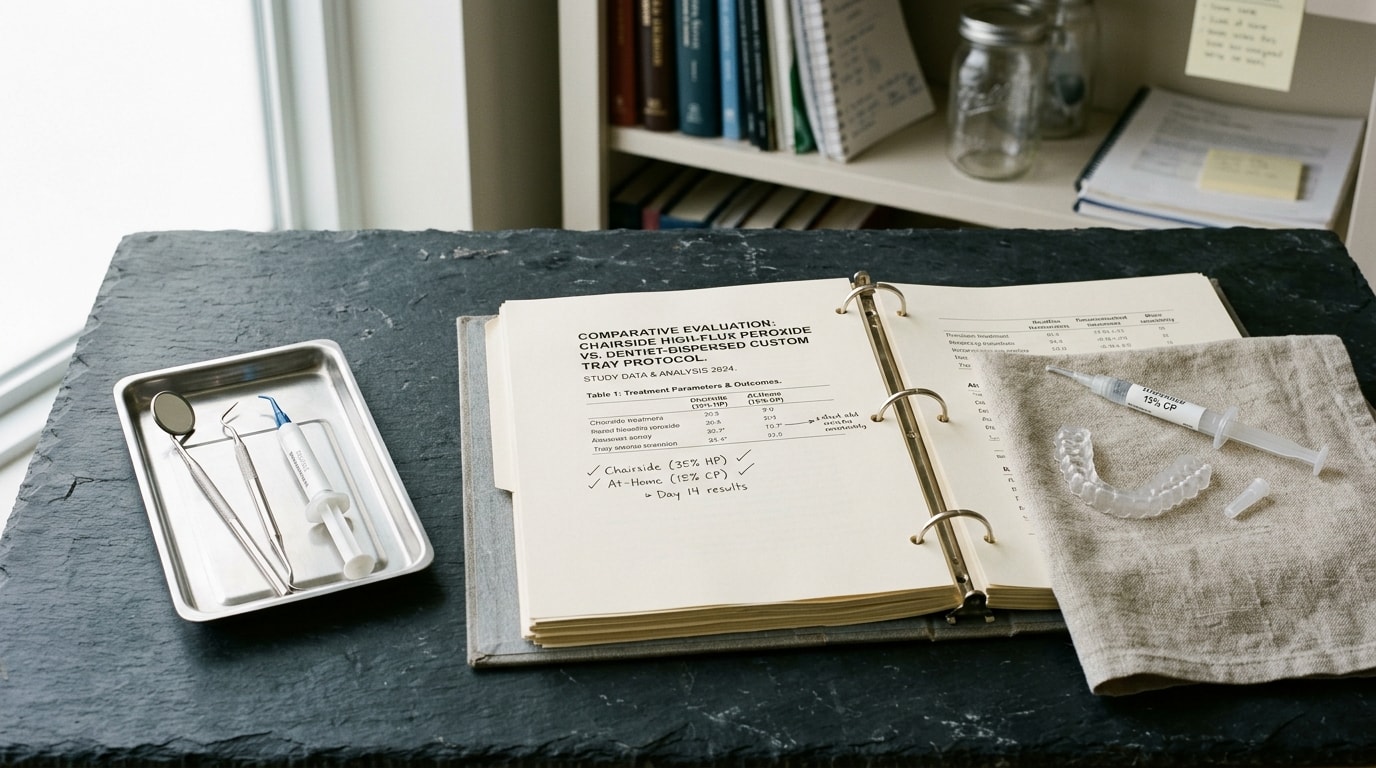
Consumers considering vital tooth bleaching face a fundamental decision: pay for a fast, concentrated chairside treatment in a dental clinic, or use a take-home protocol over several weeks. Clinical marketing frequently implies that chairside procedures produce a dramatically whiter final shade that over-the-counter or take-home systems cannot match.
Systematic reviews and clinical meta-analyses tell a different story. In controlled trials measuring color change with spectrophotometers and standardized shade guides, dentist-dispensed at-home bleaching and in-office bleaching reach equivalent aesthetic endpoints. The primary differences between the two modalities are speed, peroxide concentration, professional supervision, and the risk and severity of acute tooth sensitivity.
Understanding the clinical trade-offs between in-office and at-home teeth whitening helps patients select the protocol best aligned with their timeline, biological sensitivity tolerance, and oral health status.
The Short Answer
When evaluating in-office versus at-home bleaching, clinical literature establishes three central conclusions:
- Equivalent final whitening: Multiple systematic reviews confirm that dentist-dispensed custom at-home trays (using 10% to 16% carbamide peroxide) achieve the same final shade improvement as high-concentration in-office bleaching (using 25% to 40% hydrogen peroxide).
- Speed versus gradual change: In-office whitening works much faster, producing a noticeable shade shift in a single 60-to-90-minute appointment. At-home bleaching requires daily wear over two to four weeks to reach that same aesthetic saturation point.
- Sensitivity trade-off: High-concentration in-office bleaching triggers a higher incidence and intensity of acute tooth sensitivity (“zingers”) than gradual at-home protocols.
- Supervision and safety: In-office treatments provide professional soft-tissue isolation, protecting gums from chemical burns. At-home treatments require patient compliance and careful gel placement to avoid gingival irritation.
Paying for in-office whitening buys immediate turnaround and chairside supervision. It does not buy a permanently superior shade of white.
What Actually Makes Teeth Whiter?
Tooth discoloration falls into two primary categories: extrinsic and intrinsic. Extrinsic stains form on the outer enamel surface from dietary chromogens (coffee, tea, red wine, tobacco). These can often be removed mechanically through professional dental prophylaxis or mildly abrasive toothpastes.
Intrinsic discoloration resides deeper within the crystalline microstructure of enamel and dentin. Natural aging, micro-cracks, developmental enamel defects, and chromogenic molecules bound inside organic protein matrices cause teeth to darken from within. Altering this intrinsic color requires chemical bleaching.
       EXTRINSIC STAIN                          INTRINSIC CHROMOPHORES
       ================                          ======================
       Surface deposits                         Complex organic molecules
       (Tannins, polyphenols, tar)              embedded inside enamel/dentin prisms
             |                                             |
             v                                             v
     Mechanical removal                       Chemical peroxide oxidation
     (Prophylaxis, brushing)                  (Breaks double bonds into colorless diols)
The Mechanism of Peroxide Bleaching
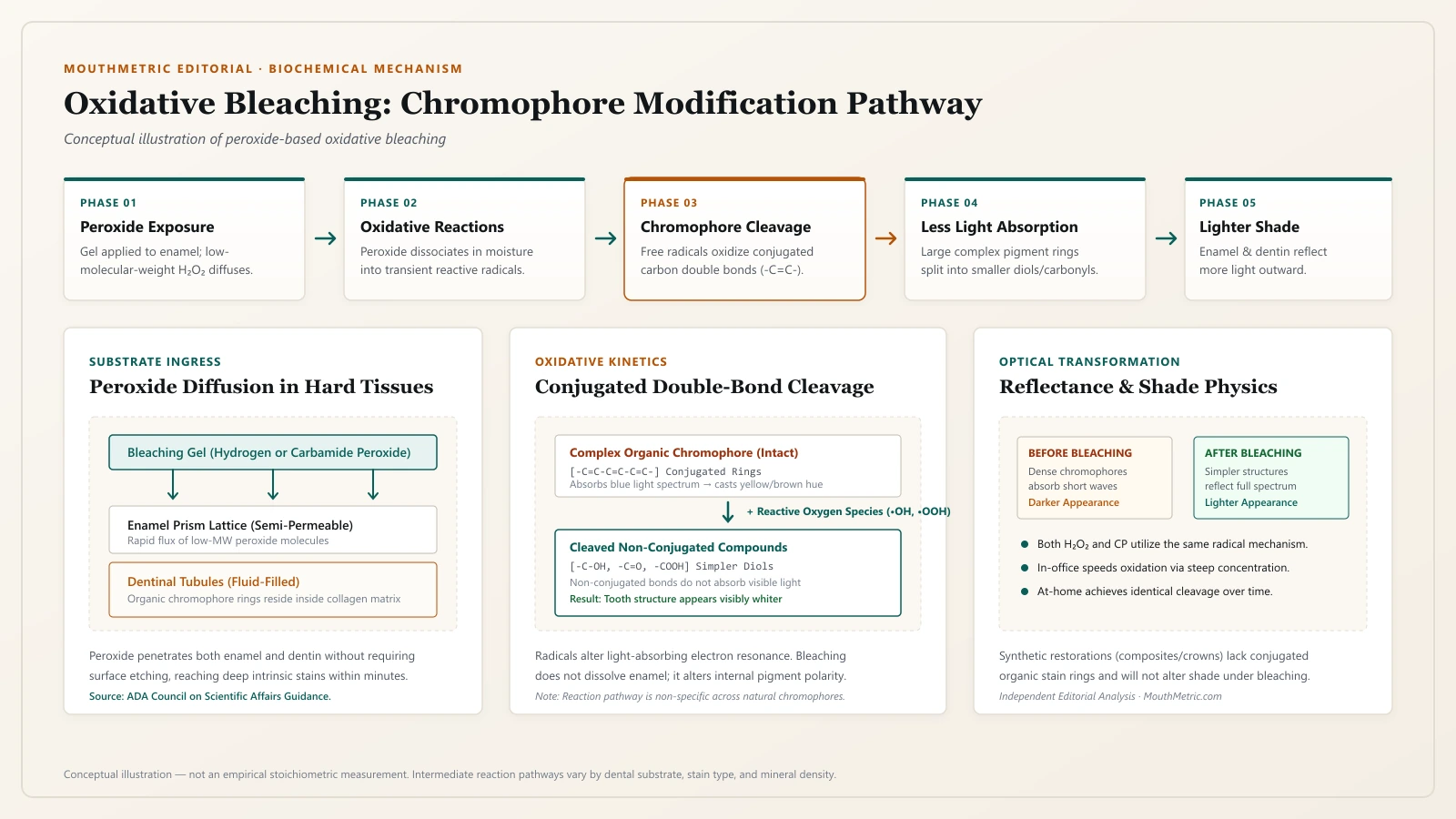
Both in-office and at-home vital bleaching rely on the same fundamental oxidative chemistry. The active agent is either hydrogen peroxide (H₂O₂) or carbamide peroxide (CH₆N₂O₃).
Hydrogen peroxide is a low-molecular-weight compound capable of rapidly diffusing through the semi-permeable enamel prism structure and into the underlying dentinal tubules. Once inside the tooth, peroxide dissociates in the presence of moisture into reactive oxygen species, including hydroxyl free radicals (•OH) and perhydroxyl radicals (•OOH).
While the exact intermediate reaction pathways of dental bleaching remain an active area of physicochemical inquiry, the widely accepted mechanism involves non-specific oxidative cleavage of conjugated double bonds in organic chromophores (stain molecules). By breaking these conjugated bonds, the oxidative process transforms large, light-absorbing pigment structures into smaller, simpler molecules that absorb less visible light and reflect more light outward, making the tooth appear visibly whiter.
Hydrogen Peroxide vs. Carbamide Peroxide
The primary chemical difference between in-office and at-home whitening lies in the formulation and release kinetics:
- Hydrogen peroxide: Used primarily in chairside in-office procedures at concentrations between 25% and 40%. It is chemically active immediately upon application, releasing its oxidative burst within 15 to 30 minutes.
- Carbamide peroxide: The standard agent for dentist-dispensed take-home trays, typically formulated at 10% to 16% (and occasionally up to 22%). Carbamide peroxide is an adduct of urea and hydrogen peroxide. Upon contact with oral moisture, it dissociates in a 1:3 ratio: a 10% carbamide peroxide gel yields roughly 3.35% hydrogen peroxide and 6.65% urea.
               CARBAMIDE PEROXIDE DISSOCIATION (10% GEL)
               =========================================

                     [ 10% Carbamide Peroxide ]
                                  |
                   +--------------+--------------+
                   |                             |
                   v                             v
       3.35% Hydrogen Peroxide              6.65% Urea
                   |                             |
                   v                             v
         Reactive Free Radicals         Ammonia + Carbon Dioxide
         (Cleaves chromophore bonds)    (Elevates local pH, stabilizing enamel)
This chemical dissociation carries important clinical advantages for at-home use. First, carbamide peroxide releases roughly 50% of its active peroxide during the first two to four hours, with residual release continuing for up to six hours, allowing steady overnight or multi-hour diffusion. Second, the breakdown of urea into ammonia and carbon dioxide elevates the local pH inside the tray, counteracting acidity and reducing the risk of enamel demineralization during prolonged contact.
In-Office Whitening: Faster, Not Necessarily a Better Final Shade
In-office vital bleaching is engineered for maximum turnaround. In a single clinical visit lasting 60 to 90 minutes, a dentist or hygienist applies high-concentration hydrogen peroxide (typically 35% to 38%) directly to the facial surfaces of the teeth in two to four consecutive 15-to-20-minute cycles.
Advantages of the In-Office Approach
- Immediate results: Patients walk out of the operatory with an immediately visible shade improvement, making chairside whitening the preferred choice before imminent personal or professional events.
- Strict gingival isolation: High-concentration peroxide is caustic to soft tissue. Chairside treatment allows the clinician to place a light-cured resin barrier (liquid dam) along the gingival margin, isolating the gums and preventing chemical soft-tissue burns.
- Zero patient compliance burden: The entire procedure is performed and monitored by dental professionals, eliminating the need for daily home tray routines.
Clinical Limitations
The primary misconception regarding in-office bleaching is that its high chemical concentration yields a superior ultimate shade. In reality, in-office bleaching forces rapid oxidation through a high concentration gradient, but the total volume of chromophores cleaved is limited by the short total contact time (typically 45 to 60 minutes).
Furthermore, a significant portion of the immediate shade shift seen immediately post-treatment stems from transient enamel dehydration. When teeth are isolated under dry conditions and exposed to chemical gels, they lose moisture, which alters their light-refraction properties and makes them appear chalky white. Over the subsequent 24 to 48 hours, as the enamel rehydrates from saliva, slight shade rebound routinely occurs.
At-Home Whitening: Slower, With Comparable Long-Term Results
Dentist-dispensed at-home whitening represents the original vital bleaching protocol introduced by Haywood and Heymann in 1989. In this modality, the clinician takes impressions or digital scans of the patient’s dentition to fabricate custom-fitted, scalloped plastic trays. The patient receives syringes of carbamide peroxide gel (most commonly 10% or 16%) to wear daily for one to four hours, or overnight, for a period of two to four weeks.
+-----------------------------------------------------------------------------------+
|                        AT-HOME CUSTOM TRAY PROTOCOL                               |
+-----------------------------------------------------------------------------------+
|  1. Dental Assessment    Clinician verifies absence of active decay and gum disease.|
|  2. Precision Scans      Digital scan or alginate impression of upper/lower arches.|
|  3. Custom Fabrication   Laboratory vacu-forms thin trays with scalloped borders.  |
|  4. Controlled Dosing    Patient dispenses small drop of 10–16% CP into each tooth.|
|  5. Progressive Wear     Worn 2–4 hours daily or overnight for 14–21 consecutive   |
|                          days until aesthetic saturation is reached.              |
+-----------------------------------------------------------------------------------+
The Biology of Prolonged Low-Dose Bleaching
At-home bleaching operates on the principle of prolonged contact time rather than concentrated chemical force. By exposing the tooth structure to lower peroxide concentrations over 30 to 60 cumulative hours, peroxide radicals have extended time to diffuse thoroughly through the full thickness of enamel and dentin.
Clinical trials demonstrate that this gradual approach reaches the same “saturation plateau”—the biological limit where all accessible chromophores have been oxidized and no further lightening can occur—as chairside bleaching. Color stability over six to twelve months is equal to, and in some trials slightly superior to, single-session in-office procedures because the oxidation process occurred uniformly without relying on dehydration effects.
What About OTC Whitening Strips?
Over-the-counter (OTC) whitening strips represent a third distinct category that should not be conflated with dentist-dispensed custom trays.
Whitening strips consist of thin, flexible polyethylene bands coated on one side with an adhesive gel containing hydrogen peroxide (typically 6% to 14%). Users press the strip across their anterior teeth once or twice daily for 30 to 60 minutes over a period of 10 to 20 days.
Clinical Differences from Custom Trays
While high-quality clinical trials show that reputable peroxide strips can effectively lighten teeth, their physical format introduces distinct clinical constraints:
- Anatomical fit and coverage: Strips are flat, generic rectangles designed to bridge the arch. They adhere well to flat facial surfaces of central incisors, but frequently bridge over interproximal embrasures (the spaces between teeth) and struggle to adapt to rotated, crowded, or canine teeth.
- Gingival contact: Custom dentist trays are scalloped 0.5 to 1.0 mm coronal to the gumline to prevent gel from contacting the gingiva. OTC strips overlap the marginal gingiva directly, which can cause localized tissue blanching and stinging.
- Limited arch reach: Most strip packages cover only the anterior six to eight teeth, leaving premolars and molars unbleached, which can create a noticeable contrast when smiling widely.
- Formulation variance: The OTC market contains hundreds of products with widely differing peroxide concentrations, pH stabilizers, and adhesive chemistries. Clinical findings evaluating custom-tray carbamide peroxide cannot be universally applied to generic over-the-counter strip products.
What the Meta-Analyses Found
To resolve the debate between chairside and at-home bleaching, researchers have conducted comprehensive systematic reviews and meta-analyses of randomized clinical trials (RCTs). These analyses evaluate objective spectrophotometric color change (ΔE), visual shade-guide units (ΔSGU), risk of tooth sensitivity (TS), and intensity of discomfort.
| Clinical Parameter | In-Office Bleaching (~35% H₂O₂) | At-Home Custom Trays (~10–16% CP) | Meta-Analysis Consensus (de Geus 2016, 2025; Luque-Martinez 2016) |
|---|---|---|---|
| Final Aesthetic Outcome (ΔE / ΔSGU) | Rapid shade shift; reaches aesthetic saturation in 1–3 visits | Gradual shade shift; reaches aesthetic saturation in 14–21 days | Equivalent. No statistically significant difference in final color change between protocols. |
| Speed to Visible Change | Immediate (within 60–90 minutes) | Progressive (visible after 3–5 days) | In-office is significantly faster. At-home requires cumulative contact time. |
| Incidence of Tooth Sensitivity | High across trials; frequent mild-to-moderate onset | High across trials; frequent mild onset | Comparable overall risk. de Geus (2025) found no statistically significant difference in overall risk of sensitivity (RR 0.82; 95% CI 0.61–1.10). |
| Intensity of Tooth Sensitivity | Severe “zingers” and acute pulpal pain spikes | Mild to moderate generalized sensitivity | Significantly lower intensity at home. de Geus (2025) confirmed at-home protocols cause significantly lower discomfort intensity (SMD -0.78; p = 0.04). |
| Long-Term Color Stability | Slight rebound at 48 hours (rehydration); stable at 6–12 months | Minimal immediate rebound; stable at 6–12 months | Equivalent long-term stability. Both modalities maintain color comparably over 1 year. |
| Soft-Tissue Protection | Professional resin barrier (liquid dam) placed by clinician | Scalloped tray borders; excess gel wiped away by patient | Clinician-controlled in office. At-home risk depends on tray fit and patient dosing accuracy. |
| Patient Compliance | Zero compliance needed; fully provider-administered | High compliance required; daily wear for 2–3 weeks | At-home requires discipline. Non-adherence leads to incomplete results. |
Key Evidence from de Geus and Colleagues
The landmark 2016 systematic review and meta-analysis by de Geus et al. published in Operative Dentistry analyzed randomized clinical trials directly comparing at-home (10% to 16% carbamide peroxide) and in-office (35% to 38% hydrogen peroxide) bleaching. The authors found no statistically significant difference in color change between the two techniques, regardless of whether color was measured visually using shade guides or objectively using spectrophotometers.
In their updated 2025 meta-analysis in Operative Dentistry (evaluating 32 comparative trials), de Geus and co-investigators confirmed that long-term aesthetic equivalence remained robust across both modalities. Crucially, while the overall risk of experiencing any level of transient sensitivity was not statistically different between groups (Relative Risk 0.82; 95% CI 0.61 to 1.10), the intensity of tooth sensitivity was significantly lower with at-home bleaching (Standardized Mean Difference -0.78; 95% CI -1.53 to -0.03; p = 0.04). In-office patients experienced noticeably sharper pulpal discomfort, whereas at-home participants reported milder, more tolerable symptoms.
Complementing this work, systematic reviews evaluating at-home regimens (including Luque-Martinez et al. in Clinical Oral Investigations) confirm that tray-delivered carbamide peroxide produces steady shade improvement with a favorable safety profile, avoiding the intense neurogenic pain spikes triggered by high-concentration chairside gels.
Why In-Office Whitening Can Cause More Sensitivity
Tooth sensitivity is the most common adverse effect of vital bleaching. It typically manifests as a sharp, sudden, shooting pain—frequently described by patients as a “zinger”—or a lingering, dull ache that responds acutely to cold liquids and ambient air.
The Mechanism of Peroxide-Induced Sensitivity
Historically, dental sensitivity was explained primarily through Brännström’s hydrodynamic theory: temperature changes or osmotic shifts cause fluid inside dentinal tubules to move rapidly, stimulating mechanical mechanoreceptors at the pulpal border.
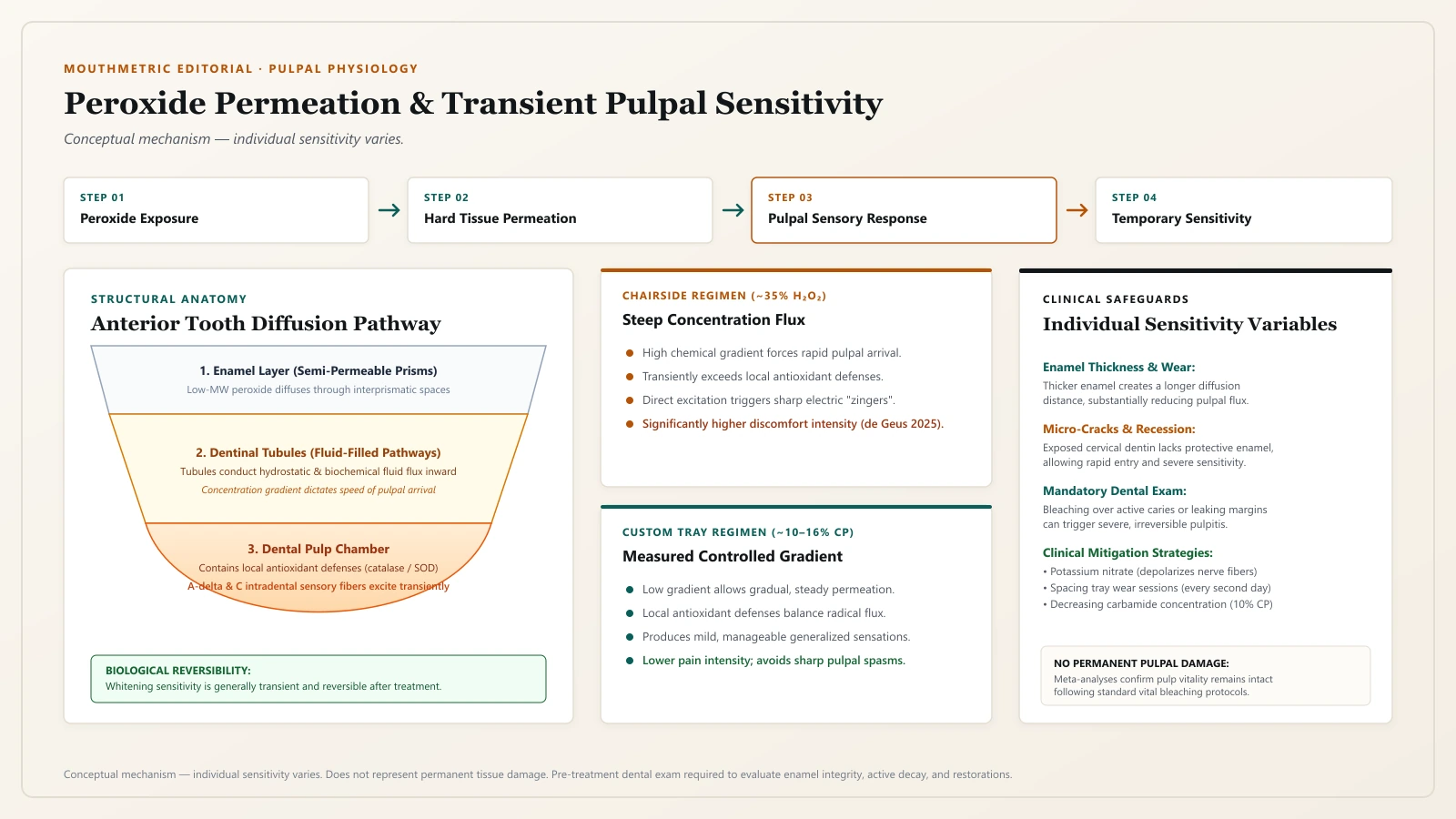
While fluid movement plays a role, bleaching sensitivity involves a direct biochemical pathway. Because hydrogen peroxide possesses a very low molecular weight, it penetrates enamel prisms, traverses dentinal tubules, and diffuses into the pulp chamber within 15 to 30 minutes of application.
       HIGH-CONCENTRATION PEROXIDE DIFFUSION INTO DENTAL PULP
       [ CONCEPTUAL PHYSIOLOGICAL PATHWAY — RESPONSE VARIES BY CONCENTRATION & ANATOMY ]
       =================================================================================

       [ 35% Hydrogen Peroxide Gel ]
                   |
                   v (Rapid diffusion down steep concentration gradient)
       [ Enamel Prism Pathways ]
                   |
                   v (15–30 minutes)
       [ Fluid-Filled Dentinal Tubules ]
                   |
                   v
       [ Pulp Chamber ]
                   |
                   +---> Overwhelms natural pulpal enzymes (catalase, SOD)
                   |
                   +---> Induces oxidative stress & neurogenic inflammation
                   |
                   v
       [ Excitation of Intradental A-Delta & C Nerve Fibers ]
                   |
                   v
       Sharp, acute pulpal sensitivity ("Zingers")
Inside the pulp, the sudden influx of reactive oxygen species overwhelms the tissue’s natural antioxidant defense enzymes (catalase and superoxide dismutase). This induces localized oxidative stress, transient pulpal inflammation, and direct chemical excitation of intradental sensory nerve fibers (specifically myelinated A-delta fibers responsible for sharp pain and unmyelinated C-fibers responsible for dull aching).
Concentration Gradient and Pulpal Overload
The severity of pulpal inflammation correlates directly with the concentration gradient:
- In-office bleaching (35% H₂O₂): Generates an intense, rapid diffusion pressure. A rapid influx of free radicals penetrates the pulp chamber over a short window, frequently triggering acute neurogenic pain spikes (“zingers”) in patients undergoing chairside treatment.
- At-home bleaching (10% CP / ~3.3% H₂O₂): Delivers a gentle, gradual concentration gradient. The rate of peroxide diffusion matches the pulp tissue’s capacity to metabolize and neutralize free radicals, resulting in significantly lower pain intensity and a substantially lower incidence of sharp pulpal spasms.
In both modalities, bleaching-induced pulpal inflammation is transient and reversible. Histological studies show that healthy dental pulp recovers completely within several days to two weeks following treatment cessation, without permanent damage to pulpal vitality.
Treatment Speed vs. Final Color
A fundamental source of consumer confusion is the distinction between how fast a tooth bleaches and how white it can ultimately become.
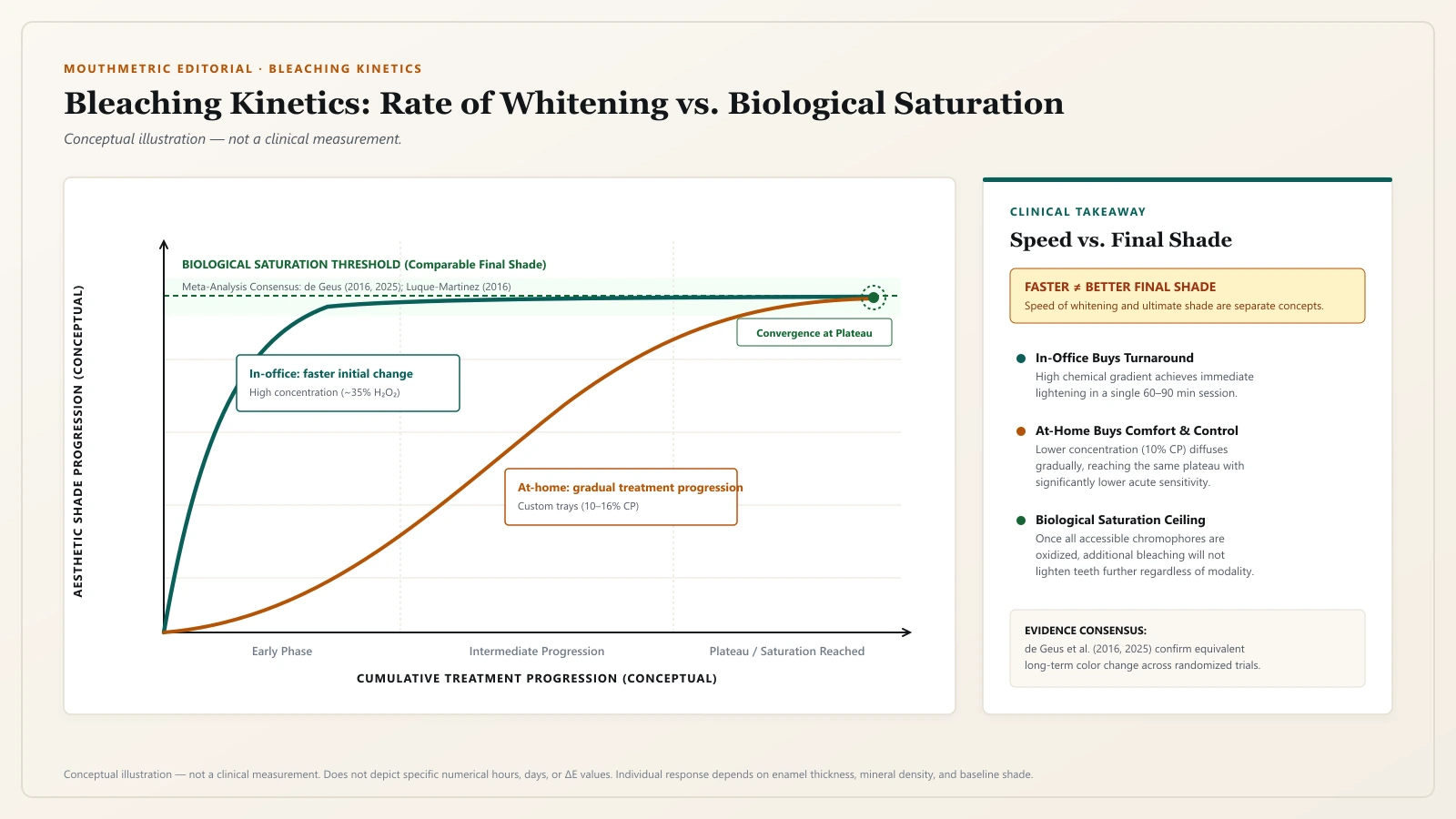
The chemical kinetics of vital bleaching can be understood conceptually as an asymptotic progression toward a biological saturation threshold rather than an empirical formula with fixed numerical coordinates:
    AESTHETIC
    LIGHTNESS
       ^
       |     [ CONCEPTUAL MODEL — RATE OF WHITENING VS. BIOLOGICAL SATURATION ]
       |
       |                                          BIOLOGICAL SATURATION THRESHOLD
       |                                      =====================================
       |                         / - - - - - - - - - - - - - - - - - - - - - - - -
       |             In-Office  /             (Comparable Final Aesthetic Endpoint)
       |           +-----------/
       |          /           /
       |         /           / At-Home Trays
       |        /           /  (Gradual Wear Sessions)
       |       /           /
       |      / (1 Visit) /
       |     /           /
       |    /           /
       |   /           /
       +--+-----------+----------------------------------------------------------->
        Early       Intermediate               Treatment Completion         TIME
        Phase       Phase                      (Saturation Reached)
In-office bleaching produces a steep initial ascent because high peroxide concentration accelerates the rate of free radical oxidation. At-home custom-tray bleaching follows a gradual progression over cumulative wear sessions. While the rate of color change differs noticeably during the initial days, systematic reviews demonstrate that both protocols converge at comparable aesthetic endpoints on average across patient populations.
Importantly, this illustration represents a biological concept rather than a uniform mathematical guarantee for every individual. Baseline tooth age, mineral density, enamel thickness, and the etiology of discoloration influence the pace of lightening and the ultimate biological ceiling.
Once a tooth reaches its biological saturation plateau, applying additional peroxide—whether chairside or at home—will not make the tooth any lighter. Attempting to bleach beyond this point yields zero additional aesthetic benefit and significantly increases the risk of enamel surface micro-pitting, loss of mineral density, and prolonged pulpal irritation.
Gingival Irritation and Safety
Soft-tissue chemical irritation is the second most common complication of vital bleaching. When hydrogen peroxide concentrations exceeding 10% come into direct contact with oral mucosa, the oxidative chemical reaction causes immediate tissue blanching, burning sensations, and transient epithelial necrosis (sloughing).
Professional Isolation in the Dental Clinic
To prevent chemical burns during 35% in-office bleaching, clinicians implement rigorous protective protocols:
- Retractors and bibs: Plastic cheek retractors and cotton rolls keep lips and buccal mucosa away from tooth surfaces.
- Liquid resin dam: A paint-on, light-cured resin barrier is placed meticulously along the scalloped gingival margin, sealing the interdental papillae and marginal gum tissue.
- Continuous monitoring: If a breach in the barrier occurs, the clinician can immediately suction away the gel and apply vitamin E oil or water to neutralize the irritation.
Preventing Irritation with Custom At-Home Trays
With custom at-home trays, soft-tissue safety relies on laboratory precision and patient adherence:
- Scalloped tray design: Quality dental laboratories scallop the tray borders precisely along the tooth margins, ensuring the plastic does not overlap the gum tissue.
- Reservoirs and gel volume: Custom trays prevent overfilling by providing tiny facial reservoirs. Patients must be taught to place only a small pinpoint drop of gel per tooth. If excess gel expresses onto the gumline during tray insertion, it should be wiped away immediately with a finger, cotton swab, or soft toothbrush.
Which Approach Fits Which Priority?
Because clinical trials demonstrate equivalent final whitening efficacy, the choice between in-office and at-home treatment should be driven by lifestyle, timeline, and biological considerations rather than expectations of superior color.
+-----------------------------------------------------------------------------------+
|                           CLINICAL SELECTION GUIDE                                |
+-----------------------------------------------------------------------------------+
|  IN-OFFICE WHITENING IS GENERALLY PREFERRED IF:                                   |
|  • You have an urgent event within 48 to 72 hours (wedding, photo shoot).         |
|  • You struggle with compliance and cannot maintain a daily 2–3 week routine.    |
|  • You prefer to have trained clinical staff handle the entire application.       |
|  • You have a high pain threshold and are not prone to baseline tooth sensitivity.|
|                                                                                   |
|  AT-HOME CUSTOM TRAYS ARE GENERALLY PREFERRED IF:                                 |
|  • You have pre-existing tooth sensitivity, recession, or enamel wear facets.     |
|  • You prefer a gradual, natural progression over 2 to 3 weeks.                   |
|  • You want long-term value: custom trays can be reused for annual touch-ups      |
|    by purchasing inexpensive replacement gel syringes.                            |
|  • You prefer treatment flexibility in the comfort of your home.                  |
+-----------------------------------------------------------------------------------+
From a financial perspective, chairside procedures represent a higher upfront investment for rapid completion. Detailed fee structures, regional price variances, and procedure billing codes are documented in our comprehensive analysis of in-office teeth whitening cost.
When Whitening Should Wait for a Dental Examination
Vital bleaching is a cosmetic procedure that should only be performed on an oral cavity free of active pathology. Initiating whitening without a comprehensive dental evaluation introduces significant clinical risks.
       MANDATORY PRE-BLEACHING DENTAL ASSESSMENT
       =========================================

       [ Patient Desires Whiter Teeth ]
                      |
                      v
       [ Comprehensive Clinical & Radiographic Exam ]
                      |
        +-------------+-------------+
        |                           |
        v                           v
  [ Pathology Present ]       [ Clean Bill of Health ]
  • Active caries             • Intact enamel
  • Leaking restorations      • Healthy gingiva
  • Exposed root dentin       • Absence of active decay
  • Severe gingivitis                 |
        |                             v
        v                     Proceed with In-Office
  Resolve disease first;      or At-Home Bleaching
  Whitening contraindicated   Protocol
Absolute Pre-Bleaching Checkpoints
A licensed dentist must verify the following before any peroxide treatment begins:
- Absence of active caries: Applying high-concentration peroxide over an undiagnosed cavity allows chemical oxidants to penetrate directly through softened dentin and into the pulp chamber, triggering excruciating, irreversible pulpitis that may necessitate root canal therapy.
- Marginal integrity of restorations: Leaking composite fillings or fractured crowns allow peroxide leakage underneath restorative margins, irritating deep dentin.
- Periodontal health: Whitening in the presence of active, bleeding gingivitis or untreated periodontitis causes intense soft-tissue stinging and compromises healing.
- Exposed root dentin: Gum recession exposes root cementum and dentin. Dentin is substantially softer and more porous than enamel, lacks enamel prism protection, and does not bleach reliably, while causing severe, immediate cold sensitivity when contacted by peroxide.
What Whitening Cannot Change
Patients frequently enter whitening consultations with unrealistic expectations regarding which dental elements will lighten.
Restorative Materials Do Not Bleach
Peroxide free radicals oxidize organic chromophores within natural hydroxyapatite crystals. They exert zero lightening effect on synthetic restorative materials:
- Dental composite resins (tooth-colored fillings)
- Porcelain veneers and ceramic crowns
- Zirconia bridges
- Acrylic dentures
If a patient possesses tooth-colored composite restorations on their anterior teeth, bleaching natural enamel around them will create an obvious color mismatch. In clinical practice, patients must be informed that existing anterior fillings or crowns may require replacement two weeks post-bleaching—once the new enamel shade has fully stabilized—to match the lightened teeth.
Intrinsic Staining Limitations
Certain developmental stains do not respond predictably to standard in-office or at-home vital bleaching:
- Tetracycline banding: Deep gray, brown, or bluish horizontal bands incorporated during childhood odontogenesis require months of continuous custom-tray treatment and may never fully resolve, often requiring porcelain veneers for acceptable aesthetics.
- Fluorosis: Mild fluorosis with chalky white spots may initially look more prominent during bleaching before background enamel lightens to blend with the patches.
- Traumatized, non-vital teeth: A tooth that has darkened following physical trauma or pulp necrosis requires internal non-vital bleaching (“walking bleach” technique) performed by an endodontist, not external vital bleaching.
In-Office vs. At-Home: Evidence Comparison
The decision matrix below synthesizes clinical evidence, practical workflows, and biological impacts across in-office treatments, dentist-dispensed custom trays, and over-the-counter strips.
| Factor | In-Office Bleaching | Dentist-Dispensed Custom Trays | OTC Whitening Strips |
|---|---|---|---|
| Typical Active Agent | 25% to 40% Hydrogen Peroxide (H₂O₂) | 10% to 16% Carbamide Peroxide (CP) | 6% to 14% Hydrogen Peroxide (H₂O₂) |
| Treatment Speed | Fast: 60 to 90 minutes in a single clinical visit | Gradual: 10 to 21 days of daily wear (1–4 hrs or overnight) | Gradual: 10 to 20 days of daily wear (30–60 min) |
| Ultimate Aesthetic Ceiling | High: reaches saturation plateau rapidly | High: reaches identical saturation plateau | Moderate to High: limited by generic strip adaptation |
| Sensitivity Profile | High incidence; elevated pain intensity with acute pulpal spikes | High incidence; significantly lower pain intensity and milder symptoms | Moderate to high incidence; varies by strip formulation and fit |
| Soft-Tissue Barrier | Light-cured resin dam placed by clinician | Scalloped custom-trimmed laboratory trays | None; generic strip overlaps marginal gingiva |
| Arch Coverage | Full arch (canine to canine or premolar to premolar) | Full arch (covers all teeth including molars) | Anterior 6 to 8 teeth only; premolars often uncovered |
| Professional Oversight | Direct chairside supervision by licensed dentist | Supervised: custom impressions, progress checks | Unsupervised self-care |
| Evidence Strength | Strong (Dozens of RCTs; meta-analyses in Operative Dentistry) | Strong (Gold-standard clinical research baseline since 1989) | Moderate (Formulation-specific trials; generic strip limitations) |
| Core Trade-Off | Maximum speed and supervision vs. higher cost and sensitivity | Lowest sensitivity and reusable trays vs. daily compliance | Low upfront cost vs. uneven arch reach and gum contact |
The Bottom Line
When choosing between in-office and at-home teeth whitening, clinical evidence provides clear guidance:
- The final shade is equivalent: Comprehensive meta-analyses establish that high-concentration chairside bleaching and dentist-dispensed custom at-home trays achieve the same ultimate aesthetic outcome. In-office whitening does not produce a whiter final result; it simply achieves that result faster.
- In-office trades sensitivity for speed: Chairside treatment delivers an immediate shade shift in a single appointment, making it ideal for patients with immediate deadlines. However, the steep peroxide concentration gradient carries a substantially higher risk of acute, sharp pulpal sensitivity.
- At-home custom trays offer the best biological balance: For patients without an urgent timeline, dentist-dispensed custom trays using 10% to 16% carbamide peroxide represent the gentlest, most controlled protocol. Gradual diffusion minimizes pulpal trauma while delivering identical long-term color stability.
- A dental exam must precede any treatment: Bleaching over active tooth decay, leaking fillings, or untreated gum disease can cause severe, irreversible pulpal inflammation. A professional evaluation ensures that vital bleaching is clinically safe for your dentition.
- Restorations will not change color: Peroxide whitens natural enamel and dentin only. Composite fillings, crowns, and veneers will maintain their original shade and may require post-bleaching replacement to match your lightened smile.
Sources
- Operative Dentistry (2016) — At-home vs In-office Bleaching: A Systematic Review and Meta-analysis (de Geus et al.) — accessed 2026-09-27
- Operative Dentistry (2025) — At-home vs In-office Bleaching: An Updated Systematic Review and Meta-analysis (de Geus et al.) — accessed 2026-09-27
- Clinical Oral Investigations (2016) — Comparison of efficacy of tray-delivered carbamide and hydrogen peroxide (Luque-Martinez et al.) — accessed 2026-09-27
- American Dental Association (ADA) — Whitening Oral Health Topics — accessed 2026-09-27
- Journal of Dentistry (2018) — In-office dental bleaching with light vs. without light (Maran et al.) — accessed 2026-09-27
- Quintessence International (1989) — Nightguard vital bleaching (Haywood & Heymann) — accessed 2026-09-27