LearnTeeth Whitening
Baking Soda for Teeth Whitening: Clinical Evidence, RDA Abrasion, and Enamel Safety
Does baking soda whiten teeth or damage enamel? Explore clinical evidence, Relative Dentin Abrasivity (RDA) testing, and risks of acidic DIY recipes.
Baking soda—sodium bicarbonate (NaHCO₃)—is widely promoted for home smile brightening. Online guides frequently celebrate it as an accessible approach to baking soda teeth whitening. Yet public discussions often polarize: claims that baking soda bleaches teeth like professional treatments compete with warnings that brushing with it inevitably strips dental enamel.
Clinical dental science provides a clearer reality. Baking soda brightens teeth exclusively through mechanical stain removal, not chemical bleaching. It physically lifts extrinsic surface stains accumulated from dietary chromogens like coffee, tea, and red wine, revealing natural baseline tooth shade. It does not bleach internal tooth color, alter underlying dentin pigmentation, or lighten synthetic dental restorations. Standardized laboratory testing also confirms that pure sodium bicarbonate is inherently low in abrasivity—measuring substantially lower on Relative Dentin Abrasivity (RDA) scales than conventional silica toothpastes.
Enamel safety, however, involves more than abrasive hardness. Mixing baking soda with acidic household ingredients like lemon juice introduces severe chemical hazards, promoting mineral dissolution and increasing vulnerability to mechanical wear. Understanding what baking soda can accomplish, how abrasive wear occurs, and where biological boundaries lie allows consumers to make informed, medically sound oral hygiene decisions.
Context & Editorial Standards: Independent oral health education. This article evaluates clinical evidence on sodium bicarbonate and does not provide personal medical or dental advice. MouthMetric maintains strict editorial independence, accepting zero commercial sponsorships, product placement fees, or affiliate commissions. Clinical evaluations cite peer-reviewed literature, standard laboratory specifications, and professional guidelines. See our editorial policy and research methodology.
Does Baking Soda Actually Whiten Teeth?
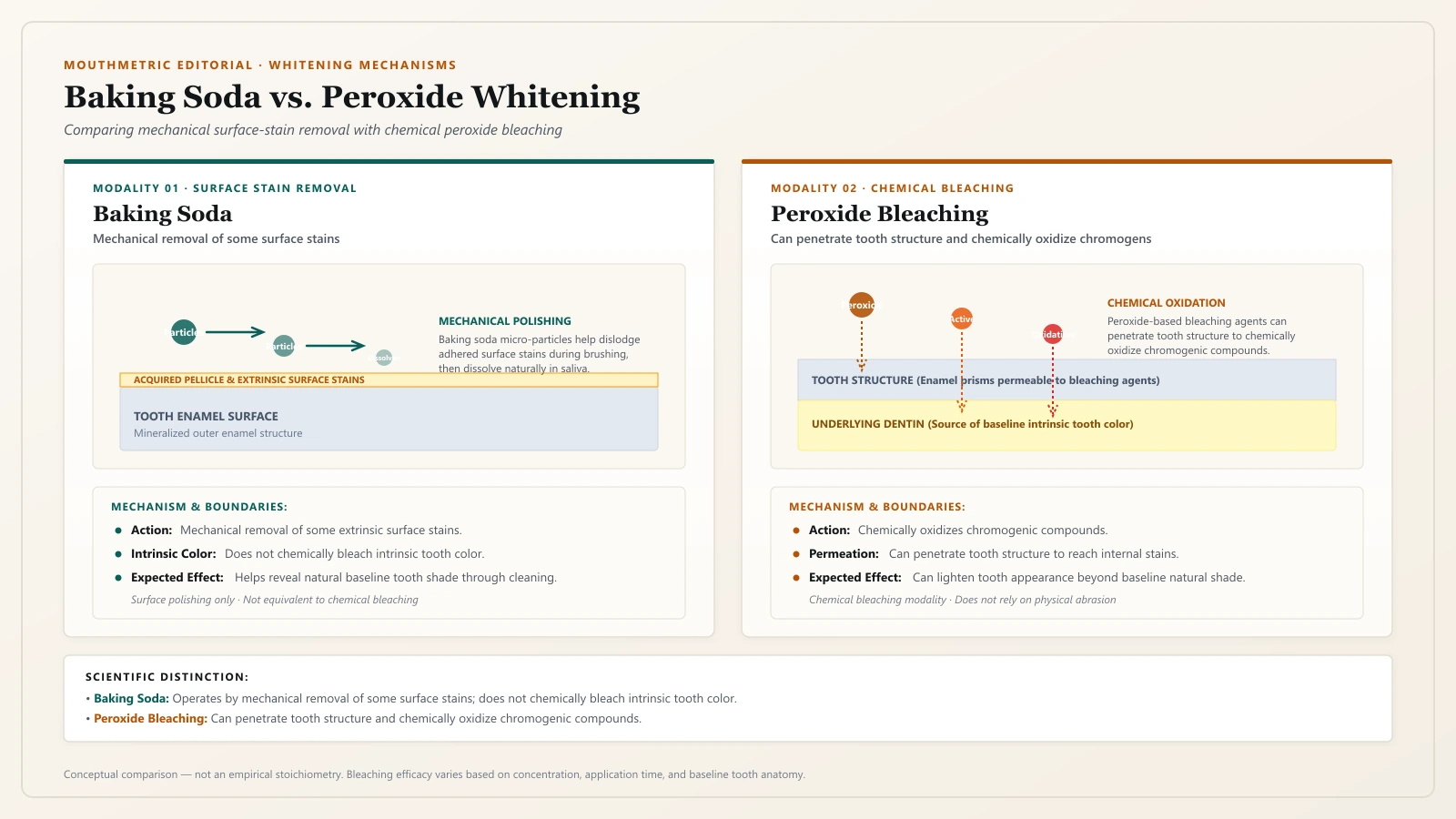
In dental science, tooth whitening comprises two distinct mechanisms: mechanical removal of extrinsic surface stains and chemical oxidation of intrinsic chromophores. Baking soda operates exclusively within the first category. It is an effective mechanical polishing agent for pellicle discoloration, but possesses zero chemical bleaching capacity.
Mechanical Stain Removal vs. Chemical Bleaching
Dietary chromogens from coffee, tea, wine, and tobacco adsorb onto the acquired enamel pellicle—the salivary protein film coating teeth. Over time, these chromogens cross-link, creating visible surface discoloration.
Mechanical stain removal relies on shear friction. As abrasive particles pass across enamel, physical contact dislodges adhered pellicle deposits. Sodium bicarbonate crystals act as soft polishing micro-particles, clearing extrinsic stains without altering dental mineral structure.
Chemical bleaching operates through oxidation. Bleaching agents like hydrogen peroxide (H₂O₂) and carbamide peroxide dissociate into reactive oxygen species, including hydroxyl (·OH) and perhydroxyl (·OOH) free radicals. These radicals penetrate enamel prisms into dentin, cleaving conjugated double bonds within organic chromophores to visibly lighten the tooth.
Sodium bicarbonate has zero oxidative capacity. It generates no free radicals, cannot penetrate dentin, and cannot alter intrinsic pigments. Its action stops at the superficial pellicle.
Extrinsic Surface Stains vs. Intrinsic Tooth Color
Distinguishing between stain types is essential before starting any home care routine:
- Extrinsic Discoloration: Stains residing on the external tooth surface or within the acquired pellicle (from coffee, tea, wine, chlorhexidine, or tobacco). Baking soda’s mechanical polishing lifts these deposits, restoring teeth to their natural baseline shade.
- Intrinsic Discoloration: Pigmentation within the internal crystalline structure of enamel or dentin. Human teeth naturally display a pale yellow to grayish-yellow dentin hue beneath translucent enamel. Intrinsic color changes stem from normal aging, tetracycline exposure, fluorosis, or pulpal necrosis following tooth trauma.
Baking soda cannot alter intrinsic discoloration. Scrubbing harder to lighten naturally yellow teeth risks abrading outer enamel, exposing more underlying yellow dentin and making teeth appear darker. Readers seeking chemical oxidation protocols can examine our clinical analysis of in-office versus at-home teeth whitening.
What Is the RDA Index?
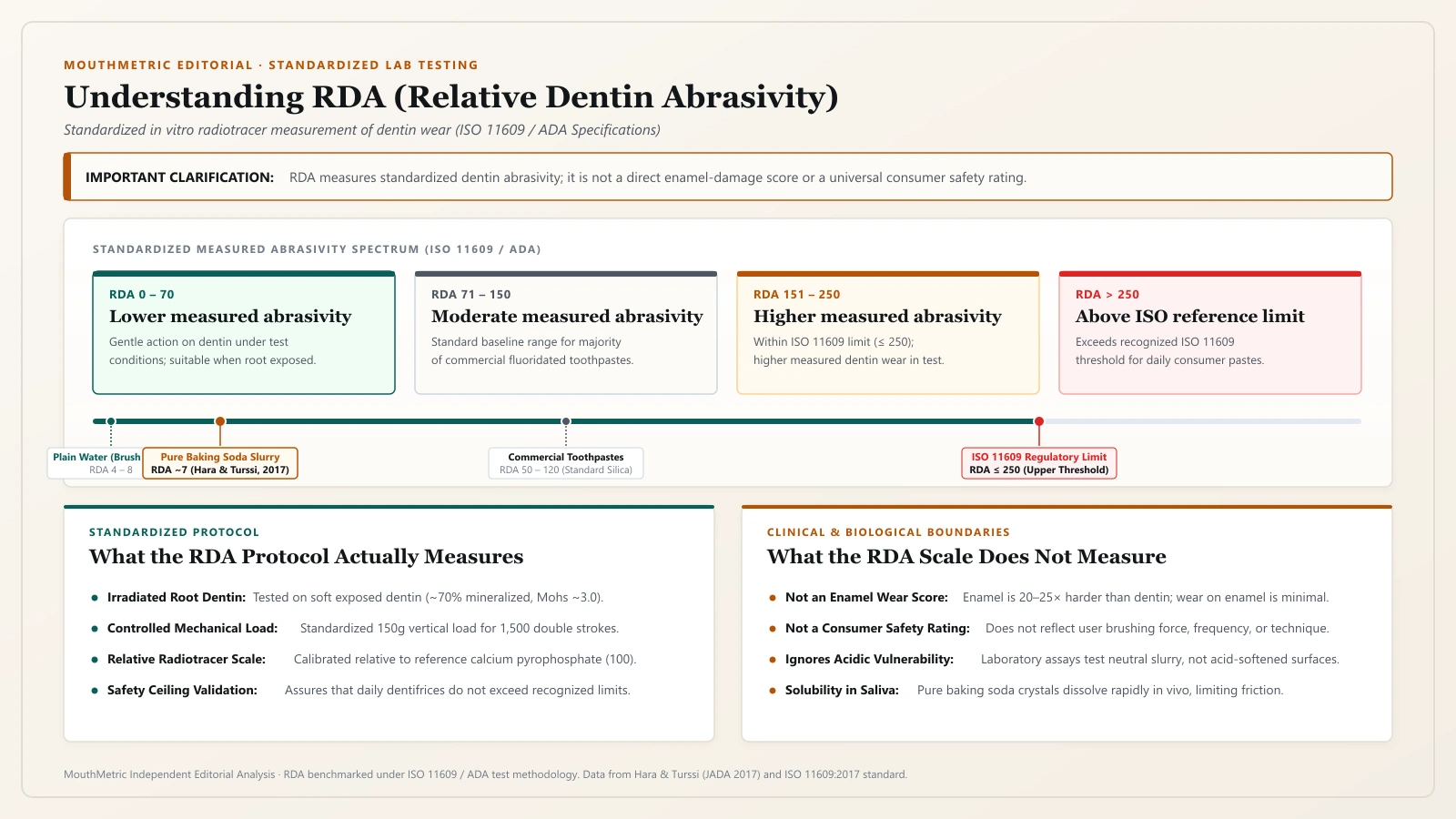
In consumer oral care, the standard benchmark for evaluating abrasive potential is the Relative Dentin Abrasivity (RDA) index. Popular media often misinterprets RDA as an enamel “damage score.” In clinical reality, RDA is a standardized laboratory metric reflecting abrasive potential under controlled in vitro conditions, not an absolute predictor of biological wear.
How Relative Dentin Abrasivity Is Measured
Codified under ISO 11609 and standardized by the American Dental Association (ADA), RDA measures dentifrice slurry wear on root dentin under strict mechanical conditions:
- Specimen Preparation: Human or bovine teeth have coronal enamel removed to expose flat root dentin.
- Neutron Irradiation: Specimens are irradiated, converting stable phosphorus (³¹P) into radioactive phosphorus-32 (³²P).
- Standardized Brushing: Teeth are brushed mechanically under a 150-gram vertical load for 1,500 double strokes.
- Radiotracer Counting: Abraded dentin in the slurry is measured via scintillation counter relative to reference calcium pyrophosphate (Ca₂P₂O₇) assigned baseline 100:
How the RDA calculation works:
RDA = 100 × (test slurry reading ÷ reference slurry reading)
In simple terms: The test material’s measured dentin wear is compared with a standardized reference material (calcium pyrophosphate, calibrated at baseline 100).
What RDA Can — and Cannot — Tell You
Dental researchers emphasize critical boundaries of the RDA scale:
- RDA Measures Dentin, Not Enamel: Coronal enamel is 96% mineralized and 20 to 25 times harder than dentin (~70% mineral). Slurries producing dentin wear in vitro cause negligible wear on sound enamel.
- RDA Standardizes Human Variables: Heavy scrubbing with low-RDA paste can inflict more wear than gentle brushing with higher-RDA paste. Real-world wear depends on force, frequency, and bristle stiffness.
- Regulatory Thresholds: Under ADA and ISO 11609 standards, any dentifrice with an RDA ≤ 250 is considered safe for lifetime daily human use on healthy dentition:
Important Clarification: RDA measures standardized dentin abrasivity under specified in vitro laboratory conditions; it is not a direct enamel-damage score or a universal consumer safety rating.
| RDA Range | Measured Abrasivity Category | Practical Significance (ISO 11609 / ADA) |
|---|---|---|
| 0 – 70 | Lower measured abrasivity | Gentle action on dentin under test conditions; commonly selected when root exposure is present. |
| 71 – 150 | Moderate measured abrasivity | Standard baseline range for the majority of commercial adult fluoridated toothpastes. |
| 151 – 250 | Higher measured abrasivity | Within the ISO 11609 limit (≤ 250); reflects higher measured dentin wear in test assays. |
| > 250 | Above ISO reference limit | Exceeds the recognized ISO 11609 laboratory threshold for daily consumer dentifrices. |
Where Sodium Bicarbonate Fits
In testing published in the Journal of the American Dental Association (Hara & Turssi, 2017), a pure sodium bicarbonate water slurry registered an RDA of approximately 7—comparable to plain water with a nylon brush (RDA 4–8) and far below commercial pastes (RDA 60–120). Pure baking soda sits at the bottom of the spectrum because its crystals dissolve rapidly in saliva.
However, consumers must distinguish pure baking soda from commercial baking soda toothpastes. Because pure bicarbonate’s low RDA limits stain removal efficacy, manufacturers blend it with harder abrasives like hydrated silica (SiO₂·nH₂O). Commercial baking soda toothpastes typically exhibit overall RDAs between 50 and 120—firmly within moderate laboratory ranges.
Can Baking Soda Damage Enamel?
Pure sodium bicarbonate used properly on sound enamel is exceptionally unlikely to cause mechanical damage. However, declaring baking soda universally harmless overlooks tooth anatomy and real-world brushing mechanics.
Human enamel consists of densely packed hydroxyapatite crystals (Ca₁₀(PO₄)₆(OH)₂) organized into prism rods. On the Mohs hardness scale (1 to 10), enamel rates approximately 5. By comparison:
- Sodium bicarbonate crystals rate approximately 2.5.
- Hydrated silica abrasives rate between 2.5 and 3.5.
- Calcium carbonate rates approximately 3.0.
- Alumina polishing agents rate approximately 9.0.
Mineralogically, a particle with a Mohs hardness of 2.5 cannot scratch a mineral with a hardness of 5.0. Scanning electron microscopy confirms that brushing sound enamel with sodium bicarbonate slurries produces no scratch gouges or significant surface loss.
Nevertheless, abrasive wear in human mouths is a multifactorial tribological process governed by several interacting variables:
- Applied Brushing Force: Brushing with excessive force (300–400g versus recommended 150–200g) splays bristles and drives slurry aggressively against cervical margins.
- Bristle Hardness: Stiff bristles lacking polished, end-rounded tips act as mechanical scrapers.
- Brushing Motion: Vigorous horizontal scrubbing concentrates stress at the tooth’s thin cervical collar.
- Substrate Vulnerability: Gum recession exposes soft root dentin (Mohs 3.0 to 3.5). Scrubbing exposed dentin with raw powder abrades cementum, opens tubules, and triggers persistent hypersensitivity.
- Slurry Hydration: Brushing dry powder causes crystal clumps that increase initial friction before dissolving.
Brushing sound enamel gently with a soft-bristled brush and moistened baking soda presents negligible risk. But excessive force, stiff bristles, dry powder, or aggressive contact with exposed root dentin can contribute to progressive, irreversible tooth-surface wear.
Why Acidic DIY Whitening Mixtures Can Be Risky
While pure baking soda is gentle on sound enamel, viral recipes frequently suggest mixing it with household acids—such as lemon juice, apple cider vinegar, or crushed fruit—to create homemade whitening pastes.
These combinations represent a significant oral health hazard due to the destructive synergy between chemical demineralization and mechanical friction.
Lemon Juice and Other Acidic Ingredients
Unbuffered household acids exhibit pronounced chemical acidity:
- Lemon juice (citric acid): pH 2.0 to 2.6
- Commercial vinegar (acetic acid): pH 2.5 to 3.0
- Strawberries (malic/citric acid): pH 3.4 to 3.8
- Dissolved vitamin C (ascorbic acid): pH < 2.5
Proponents assume alkaline baking soda (pH ~8.3) neutralizes acidic juice. In practice, unmeasured acid volumes regularly overwhelm the bicarbonate, leaving the mixture acidic. The vigorous bubbling is merely escaping carbon dioxide gas (NaHCO₃ + H⁺ → Na⁺ + H₂O + CO₂↑), not evidence of complete acid neutralization.
Demineralization and Acid Exposure
Enamel hydroxyapatite exists in dynamic equilibrium with salivary minerals. The threshold below which dental minerals dissolve is the critical pH:
- For dental enamel: critical pH is approximately 5.5 (dropping to 4.5 with fluorapatite).
- For exposed root dentin: critical pH is approximately 6.2 to 6.7.
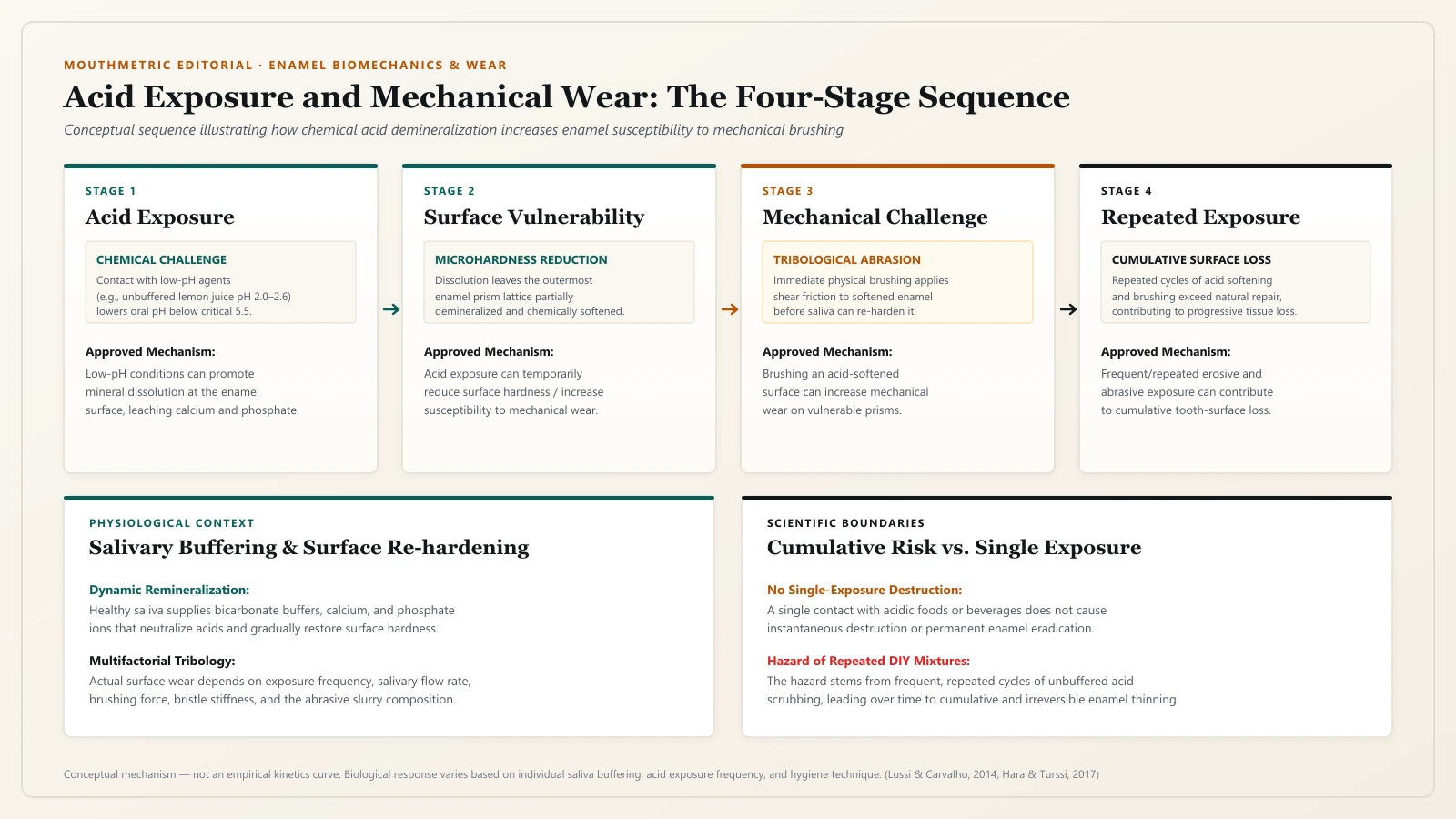
Below pH 5.5, hydrogen ions (H⁺) promote mineral dissolution, leaching calcium and phosphate from hydroxyapatite crystals. Contact with unbuffered acids lowers surface microhardness, leaving outer enamel prisms chemically softened.
Why Brushing an Acid-Softened Surface Is Different
Under normal oral conditions, saliva gradually neutralizes dietary acids, supplying minerals that restore surface equilibrium.
The primary hazard of DIY acid mixtures is immediate mechanical friction applied to an acid-softened substrate. Brushing a softened surface can physically dislodge weakened enamel prisms before saliva can stabilize them.
While a single exposure does not instantly destroy enamel, repeated cycles of chemical softening followed by abrasive brushing can contribute to cumulative, irreversible tooth-surface loss. Because mature enamel cannot regenerate, repeated acid scrubbing increases long-term risks of enamel thinning, incisal translucency, cervical hypersensitivity, and visible yellowing as underlying dentin becomes exposed. Dental authorities strongly advise against mixing baking soda with household acids.
What Does Clinical Research Show?
Peer-reviewed clinical trials evaluate sodium bicarbonate dentifrices across three performance areas: surface stain removal, plaque biofilm debridement, and oral acid buffering.
Surface Stain Removal
Randomized clinical trials confirm that baking soda dentifrices effectively remove extrinsic stains. In a literature review in the Journal of the American Dental Association, Li (2017) reported that sodium bicarbonate dentifrices demonstrated statistically significant stain reduction over negative controls, performing comparably or superiorly to silica pastes with higher RDA ratings. This cleaning efficiency stems from crystal solubility dynamics: brushing provides an initial shear burst that disrupts the pellicle, after which rapid dissolution prevents prolonged scratching. Ghassemi and colleagues (2008) verified in a 4-week trial that baking soda dentifrices achieved significantly greater reductions in Lobene Stain Index scores than silica controls.
Plaque and Biofilm
Clinical trials show that baking soda dentifrices significantly reduce plaque scores along gingival margins. Particulate shear combined with osmotic flux weakens biofilm cohesion, facilitating removal during brushing. However, this disruption is strictly mechanical; baking soda does not sterilize oral tissues or substitute for interdental flossing.
Buffering and Oral Environment
Salivary bicarbonate is the body’s primary physiological buffer against dental caries. Cariogenic bacteria (Streptococcus mutans, Lactobacillus) ferment carbohydrates into lactic acid, driving plaque pH below the critical 5.5 threshold. In an authoritative review on biofilm acid neutralization, Zero (JADA, 2017) demonstrated that exogenous sodium bicarbonate:
- Neutralizes Plaque Acids: Bicarbonate ions (HCO₃⁻) bind hydrogen ions (H⁺) to form carbonic acid (H₂CO₃), which rapidly dissociates into water and carbon dioxide:
Chemical buffering equilibrium:
HCO₃⁻ + H⁺ ⇌ H₂CO₃ ⇌ H₂O + CO₂
In simple terms: Bicarbonate binds free acidic hydrogen ions, neutralizing oral acidity and breaking down into harmless water and carbon dioxide gas.
- Elevates Microenvironment pH: Baking soda temporarily raises plaque pH to 8.0–8.3, arresting demineralization.
- Laboratory vs. Clinical Antimicrobial Effects: While high bicarbonate concentrations inhibit bacteria in vitro, in vivo antimicrobial effects are transient due to salivary clearance. Clinical evidence does not demonstrate permanent microbiome alteration.
What the Evidence Does NOT Establish
Scientific integrity requires stating where evidence ends. Clinical research does not establish that:
- Baking soda replaces fluoride: Bicarbonate neutralizes acids but does not form acid-resistant fluorapatite or match fluoride’s validated anti-caries remineralization.
- Baking soda bleaches dentin: No trial has demonstrated that baking soda penetrates dentin to alter baseline intrinsic tooth color.
- Baking soda treats periodontitis: While baking soda reduces superficial plaque, it cannot resolve deep periodontal pockets or remove subgingival calculus.
What Baking Soda Cannot Do
Understanding the physiological limitations of sodium bicarbonate prevents cosmetic disappointment and protects oral health:
1. It Cannot Bleach Intrinsic Tooth Color
Baking soda cannot oxidize dentin chromophores. If teeth have a naturally darker genetic shade, baking soda will not lighten them beyond that baseline.
2. It Cannot Substitute for Fluoride Toothpaste
Many consumers use pure baking soda to avoid fluoride. This represents a serious preventive compromise. Fluoride converts hydroxyapatite into fluorapatite (Ca₁₀(PO₄)₆F₂), lowering the dissolution threshold from pH 5.5 to 4.5. Baking soda provides zero fluoride ions to fortify enamel against acid challenges.
3. It Cannot Whiten Dental Restorations
Synthetic materials—including composite resins, porcelain veneers, ceramic crowns, and dentures—do not respond to whitening agents. Abrasive scrubbing can scratch composite surfaces and glaze, accelerating future staining.
4. It Cannot Remove Hardened Calculus (Tartar)
Once plaque calcifies into calculus, it adheres permanently to tooth surfaces. No toothpaste or powder can brush away calculus; attempting to scrub it off damages adjacent gums and root surfaces. Calculus requires professional scaling.
5. It Cannot Substitute for Diagnostic Care
A single dark tooth following trauma often indicates a necrotic pulp requiring root canal therapy. Similarly, dark spots may represent active decay needing restorative treatment before bacteria reach the nerve.
Baking Soda vs. Peroxide Whitening
When evaluating whitening approaches, consumers frequently weigh baking soda against professional or over-the-counter peroxide systems. While both improve smile brightness, their mechanisms and clinical trade-offs differ substantially:
| Approach | Primary Mechanism | Main Target | Expected Effect |
|---|---|---|---|
| Sodium Bicarbonate (Baking Soda) | Mechanical friction; physical polishing of surface pellicle | Extrinsic surface stains (coffee, tea, wine, tobacco) on outer enamel | Restores teeth to their natural baseline shade; zero change to intrinsic dentin color |
| At-Home Peroxide Whitening (Trays / Strips) | Chemical oxidation; free-radical cleavage of organic chromophores | Intrinsic enamel prisms and underlying dentin core | Lightens teeth several shades beyond natural baseline over 10 to 21 days |
| In-Office Professional Bleaching (Chairside) | High-intensity chemical oxidation (25%–40% H₂O₂) | Deep intrinsic dentin core and dense chromophore deposits | Rapid, dramatic shade improvement (5–8 shades) achieved in a single 60-to-90-minute visit |
For patients deciding between chairside and at-home peroxide options, clinical meta-analyses confirm both achieve equivalent ultimate shade improvements, with at-home custom trays causing significantly less acute sensitivity. See our comprehensive evaluation of in-office versus at-home teeth whitening for detailed clinical trial data, and review in-office teeth whitening costs for professional fee breakdowns.
Is Baking Soda Right for You?
Determining whether baking soda fits your oral care routine depends on your specific dental anatomy, current oral health, and aesthetic goals.
When Baking Soda Can Be Helpful
An ADA-accepted commercial dentifrice containing sodium bicarbonate and fluoride is beneficial if:
- You have extrinsic staining from coffee, tea, red wine, or tobacco.
- Your gums are healthy, with zero visible root recession or exposed root dentin.
- You experience sensitivity to higher-abrasivity whitening toothpastes and desire a gentle polishing alternative.
- You want an effective acid-buffering dentifrice to counteract dietary acids.
- Your goal is maintaining your natural baseline brightness rather than chemically bleaching teeth.
When to Exercise Caution or Avoid It
Avoid brushing with pure baking soda powder or re-evaluate your routine if:
- You have gum recession with exposed root surfaces; soft dentin is vulnerable to abrasive wear.
- You have composite bonding or porcelain veneers, which can lose surface luster.
- You use pure baking soda instead of fluoridated toothpaste, eliminating primary caries protection.
- You are tempted to mix baking soda with lemon juice or vinegar, which increases susceptibility to erosive-abrasive wear.
When to Seek a Professional Dental Evaluation
Home hygiene cannot resolve underlying dental pathology. Consult a licensed dentist if you experience:
- A Single Discolored Tooth: Gray or dark discoloration often indicates pulpal necrosis or trauma requiring endodontic evaluation.
- Persistent Stains: Discoloration resistant to hygiene typically represents intrinsic staining or calculus requiring professional care.
- Tooth Pain or Sensitivity: Lingering pain to temperature, biting discomfort, or throbbing indicates active decay, cracked tooth syndrome, or pulpitis.
- Bleeding or Receding Gums: Bleeding during brushing indicates active periodontal disease that must be stabilized before cosmetic whitening.
- Visible White Chalky Spots: Chalky white bands often represent early demineralization requiring professional remineralization therapy, not abrasive scrubbing.
For guidance on clinic pricing and professional treatments, review our guide to in-office teeth whitening costs and explore our Teeth Whitening Category Hub.
The Bottom Line
Evaluating baking soda for teeth whitening through published clinical evidence yields six clear conclusions:
- Baking soda whitens via stain removal, not bleaching: Sodium bicarbonate is an effective mechanical polishing agent that removes extrinsic surface stains from food, beverages, and tobacco. It cannot penetrate dentin or alter intrinsic genetic tooth color.
- Pure baking soda has an exceptionally low RDA: Standardized laboratory testing measures pure sodium bicarbonate at an RDA of approximately 7—far below conventional silica toothpastes.
- Mohs hardness does not guarantee safety on exposed roots: Enamel (Mohs ~5) resists scratching from baking soda (Mohs ~2.5), but exposed root dentin (Mohs ~3) is soft and vulnerable to mechanical wear and hypersensitivity.
- Never combine baking soda with acids: Acidic mixtures (such as lemon juice or vinegar) promote mineral dissolution and temporarily soften the enamel surface. Brushing an acid-softened tooth increases mechanical wear, and repeated exposures can contribute to cumulative, irreversible enamel loss.
- Baking soda cannot replace fluoride: Sodium bicarbonate buffers plaque acids, but it does not form acid-resistant fluorapatite or substitute for fluoride’s anti-caries protection.
- Professional care is essential for deep discoloration: Single dark teeth, intrinsic staining, toothaches, and bleeding gums require diagnosis and treatment by a licensed dental professional.
Sources and Methodology
Every clinical statement, laboratory measurement, and biological mechanism in this analysis is derived from peer-reviewed dental literature, national standards organizations, and institutional dental authorities:
- Hara AT, Turssi CP. (2017): Baking soda as an abrasive in toothpastes: Mechanism of action and safety and effectiveness considerations. The Journal of the American Dental Association, 148(11S), S27–S33. PubMed PMID: 29056187.
- Li Y. (2017): Stain removal and whitening by baking soda dentifrice: A review of literature. The Journal of the American Dental Association, 148(11S), S20–S26. PubMed PMID: 29056186.
- Zero DT. (2017): Evidence for biofilm acid neutralization by baking soda. The Journal of the American Dental Association, 148(11S), S10–S14. PubMed PMID: 29056185.
- American Dental Association (ADA) Council on Scientific Affairs: Toothpastes: Oral Health Topics. ADA Science & Research Institute. ada.org/resources/research/oral-health-topics/toothpastes.
- American Dental Association (ADA) Council on Scientific Affairs: Whitening: Oral Health Topics. ADA Science & Research Institute. ada.org/resources/research/oral-health-topics/whitening.
- International Organization for Standardization (ISO): ISO 11609:2017 Dentistry — Dentifrices — Requirements, test methods and marking. iso.org/standard/66669.html.
- Joiner A. (2004): Tooth colour: a review of the literature. Journal of Dentistry, 32(Suppl 1), 3–12. PubMed PMID: 14738831.
- Lussi A, Carvalho TS. (2014): Erosive tooth wear: a multifactorial condition of growing concern and increasing knowledge. Monographs in Oral Science, 25, 1–15. PubMed PMID: 24993254.
- Ghassemi A, Vorwerk L, Hooper W, Putt M, Milleman K. (2008): A clinical study to evaluate the effectiveness of a baking soda dentifrice in reducing tooth stain. The Journal of Clinical Dentistry, 19(4), 160–165. PubMed PMID: 19209503.
- de Geus JL, Wambier LM, Kossatz S, Loguercio AD, Reis A. (2016): At-home vs In-office Bleaching: A Systematic Review and Meta-analysis. Operative Dentistry, 41(4), 341–356. PubMed PMID: 26867014.
Sources
- Journal of the American Dental Association (2017) — Baking soda as an abrasive in toothpastes: Mechanism of action and safety and effectiveness considerations (Hara & Turssi) — accessed 2026-09-28
- Journal of the American Dental Association (2017) — Stain removal and whitening by baking soda dentifrice: A review of literature (Li) — accessed 2026-09-28
- Journal of the American Dental Association (2017) — Evidence for biofilm acid neutralization by baking soda (Zero) — accessed 2026-09-28
- American Dental Association (ADA) — Oral Health Topics: Toothpastes — accessed 2026-09-28
- American Dental Association (ADA) — Oral Health Topics: Whitening — accessed 2026-09-28
- International Organization for Standardization (ISO) — ISO 11609:2017 Dentistry: Dentifrices: Requirements, test methods and marking — accessed 2026-09-28
- Journal of Dentistry (2004) — Tooth colour: a review of the literature (Joiner) — accessed 2026-09-28
- Monographs in Oral Science (2014) — Erosive tooth wear: a multifactorial condition of growing concern (Lussi & Carvalho) — accessed 2026-09-28
- Journal of Clinical Dentistry (2008) — A clinical study to evaluate the effectiveness of a baking soda dentifrice in reducing tooth stain (Ghassemi et al.) — accessed 2026-09-28
- Operative Dentistry (2016) — At-home vs In-office Bleaching: A Systematic Review and Meta-analysis (de Geus et al.) — accessed 2026-09-28